Our silage inoculants
SiloSolve® FC: Fungal control
Haylage, small grain silage, corn silage, HMSC/HMEC, earlage/snaplage
SiloSolve® MC: Microbial control
Haylage, small grain silage, corn silage
SiloSolve® AS: Aerobic stability
Corn silage, HMSC/HMEC, earlage/snaplage
SiloSolve® OS: Top layer protection
All crops and crop types
SiloSolve® FC: Fermentation enhancement
All crops with no specific challenges
Learn more about our inoculants
SiloSolve® FC
Bacterial inoculant for fungal control
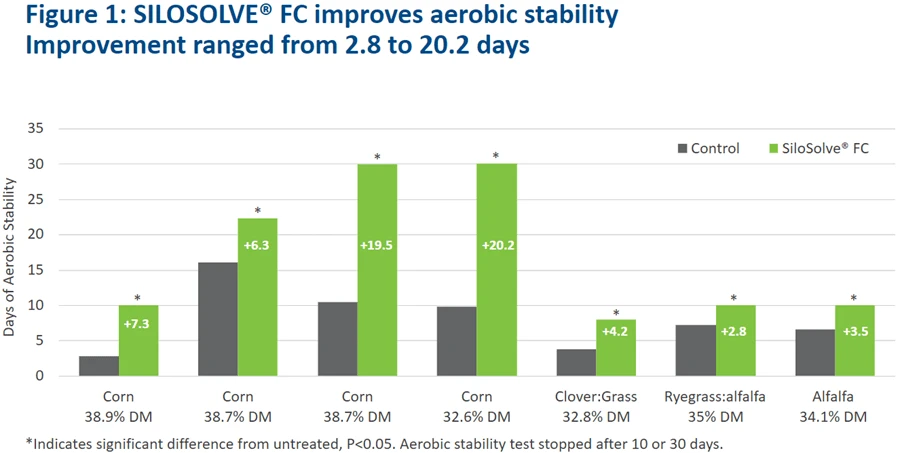
SiloSolve® FC inoculant – improved dry matter recovery and aerobic stability even at short fermentation. Aerobic stability during feed out is one of the main challenges of silage making. This is traditionally obtained using L. buchneri containing silage inoculants, with two significant downsides: Minimum 56 days of fermentation is required and the “active component” = acetic acid is associated with dry matter loss in the silage. SiloSolve® FC inoculant is a unique, breakthrough solution to these dilemmas – and beyond: It brings aerobic stability in as short as seven days of fermentation, it improves dry matter recovery – and it works across all conditions and crops!
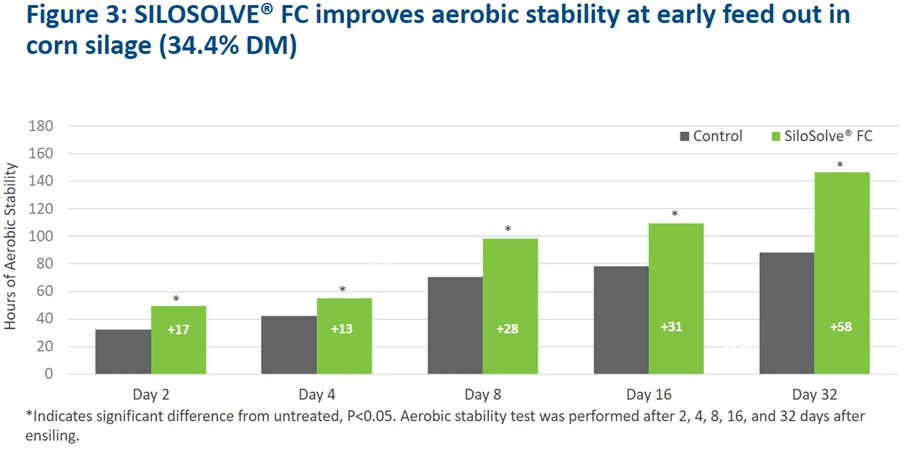
SiloSolve® FC inoculant improves stability – even at early feed out
Review of the literature indicates that L. buchneri normally produces acetic acid after 56 days of ensiling. With SiloSolve® FC, acetic acid production has been observed on Day 2 of ensiling corn silage and as a result improved aerobic stability even after a short fermentation time is obtained.
Strain matters
Chr. Hansen has diligently selected and combined the strains in SiloSolve® FC inoculant. But what better way to illustrate this than showing just exactly what this means? Click on the video below and learn about the amazing difference SiloSolve® FC inoculant makes in mold and yeast count. SiloSolve® FC – Seeing is believing™.

What’s inside SiloSolve® FC inoculant?
SiloSolve® FC inoculant contains our proprietary strain of Lactobacillus buchneri LB1819, plus our unique strain of Lactococcus lactis O224. This novel combination facilitates the rapid establishment of anaerobic conditions and improves fermentation to inhibit the growth of yeast and mold, resulting in improved aerobic stability at feed out – even after just seven days of fermentation.
Targeted crops for SiloSolve® FC inoculant include whole crop corn, small grain, grasses and alfalfa/grass mixtures. SiloSolve® FC inoculant is particularly effective when there is a risk for fungal growth and across a broad range of moistures.
Do you have an organic farm?
SiloSolve® FC EKO inoculant was designed particularly for organic farms. It provides all the positive effects mentioned for SiloSolve® FC inoculant.
SiloSolve® MC
Bacterial inoculant for Microbial Control of Silage
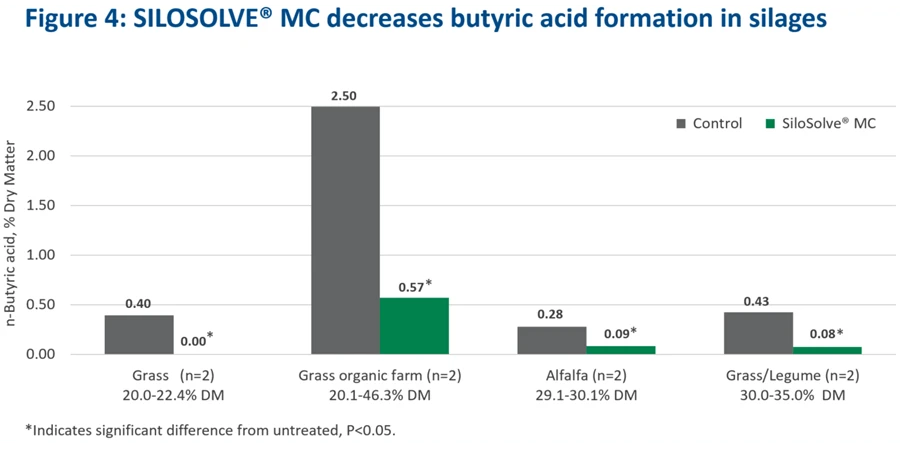
Clostridia may reduce palatability, growth of Clostridia leads to breakdown of protein and production of butyric acid. Silages fermented by Clostridia may lead to poor consumption and performance, and may negatively impact health when fed to high-producing dairy cows.
Clostridia require anaerobic conditions to grow but are sensitive to low pH. While an effective silage inoculant will quickly establish anaerobic conditions it will also rapidly reduce pH – and is considered an appropriate guard against undesired clostridial fermentation in most crops. However, wet silages, associated with an extended duration of the fermentation process, typically referred to as “buffered” or “difficult to ferment” crops such as alfalfa, present a challenge to most silage inoculants: The moist = anaerobic conditions favor clostridia and it will take a lot of lactic acid to reduce pH due to the “buffering capacity”.
SiloSolve® MC inoculant reduces Clostridial fermentation
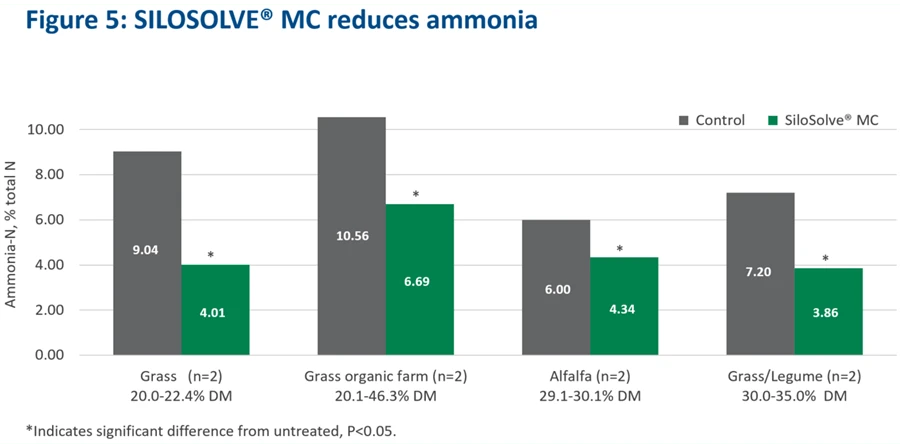
In a number of research trials, Lactococcus lactis SR3.54 has been shown to significantly reduce growth of Clostridia and butyric fermentation in silage.
What’s inside SiloSolve® MC?
SiloSolve® MC inoculant is a silage additive containing three highly selected strains of lactic acid bacteria. One strain (L. lactis SR3.54) is selected for its ability to reduce undesirable microbial fermentation. The other two direct and control overall fermentation.
Targeted crops include those that are ensiled at low dry matter/high moisture concentrations where the risk of Clostridial fermentation is high.
Silosolve® AS
Bacterial inoculant for Aerobic Stability and Enhanced Fermentation
Aerobic challenge during feed out
When silage is exposed to air, typically during feed out, spontaneous heating of the silage can occur. Yeast and mold are fungi that grow well in the presence of oxygen and they produce heat as they grow. Nutrients are lost and palatability of feed is reduced. Some crops, such as corn, are more susceptible to heating than others.
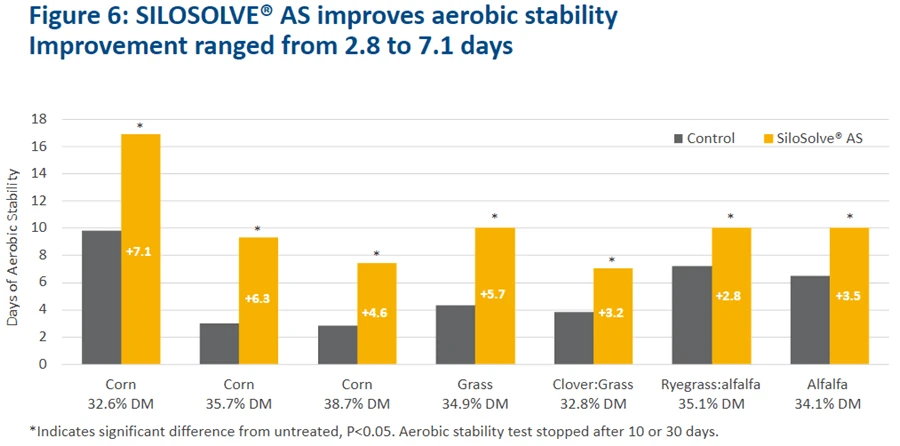
Silosolve® AS inoculant improves aerobic stability
Silosolve® AS inoculant contains two fast growing and competitive lactic acid bacteria and a unique strain of Lactobacillus buchneri. This specific bacterial strain combination improves fermentation and inhibits growth of yeast and mold, resulting in improved aerobic stability at feed out – 6 days in corn silages and 3 days in difficult-to-ensile grass and legume silages.
Silosolve® AS inoculant improves fermentation
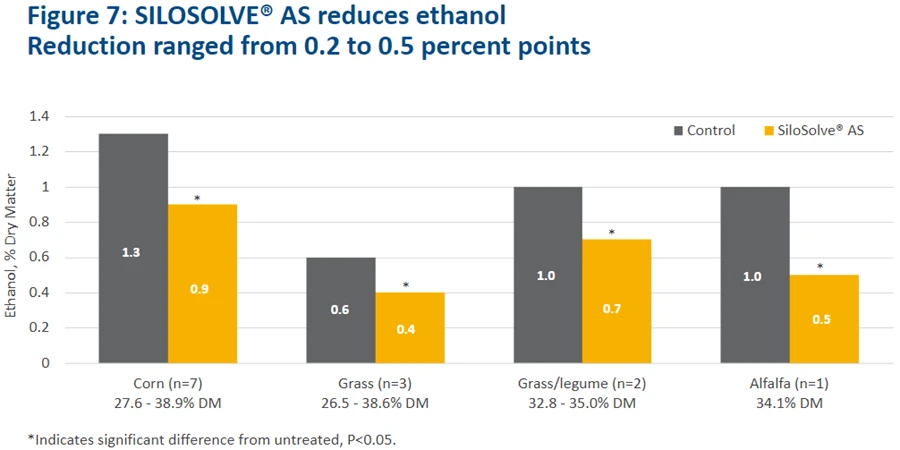
The fast starter and strong finisher lactic acid bacteria in Silosolve® AS inoculant improve silage quality. In high value crops, like alfalfa and grass/legume mixes, Silosolve® AS inoculant reduces ethanol up to 50%. In easy-to-ensile crops, Silosolve® AS inoculant reduces ethanol up to 33%.
Silosolve® AS inoculant improves dry matter recovery
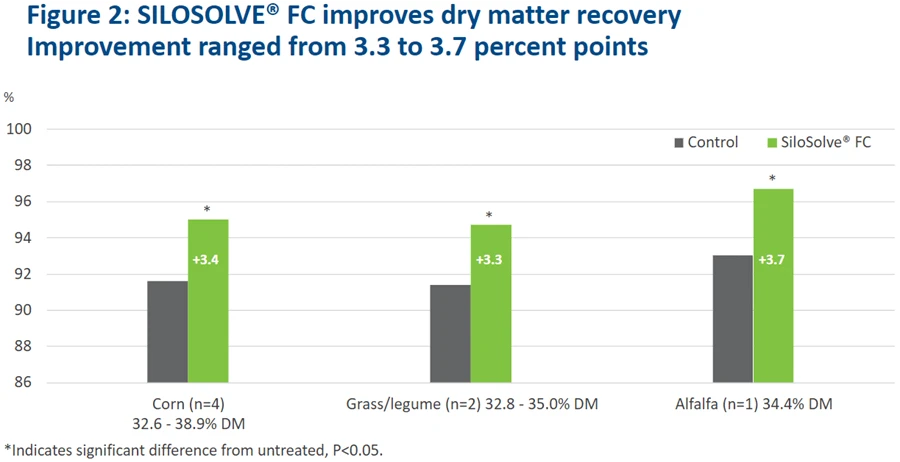
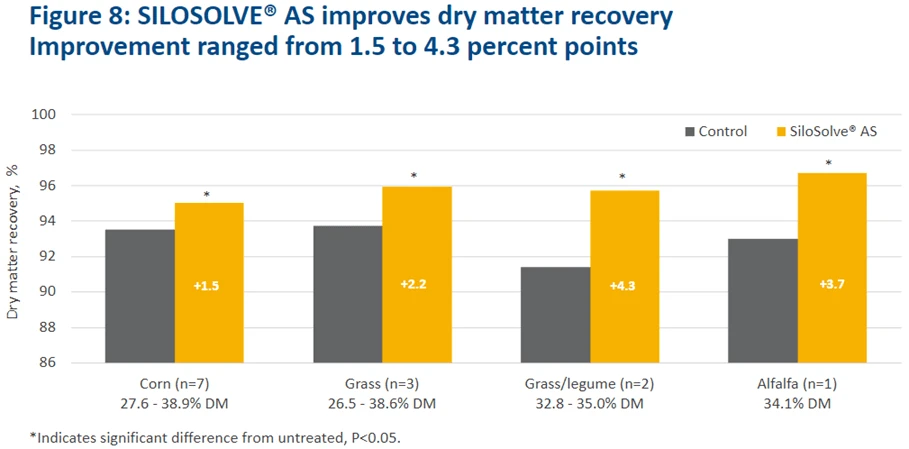
Silosolve® AS inoculant inhibits yeast and mold, reduces the breakdown of nutrients and ensures higher dry matter recovery compared to untreated silages. Dry matter recovery across crops was improved.
What’s inside Silosolve® AS inoculant
Silosolve® AS inoculant has two well proven lactic acid bacteria that drive fermentation coupled with our highly researched L. buchneri LB1819 for optimal production of acetic acid. Targeted crops for Silosolve® AS inoculant include those with high sugar and low protein, ensiled at high dry matter (low moisture) or prone to heating at feed out.
Silosolve® OS
Bacterial inoculant that reduces top layer spoilage
Top layer spoilage is a result of diffusion of oxygen through the cover along with less optimal compaction. The growth of undesirable spoilage microorganisms may also lead to production of mycotoxins. The result is extra work to remove the spoiled top layer and problems with stability at feed out.
Silosolve® OS inoculant protects your top layer
Silosolve® OS inoculant is a powerful silage inoculant that combines the effects of rigorously selected, proven lactic acid bacterial strains with a unique strain, Lactococcus lactis O224, known for its superior oxygen scavenging ability. In combination, the three bacteria shorten the time to establishment of anaerobic conditions in the top layer of silage. Silosolve® OS inoculant ensures a rapid reduction in pH of the top layer, which enhances the effectiveness of sodium benzoate as a preservative. Together with sodium benzoate, the bacteria inhibit growth of yeast and mold and promote fermentation, making Silosolve® OS inoculant ideal for top layer treatment.
Silosolve® OS inoculant inhibits growth of yeast and mold in the top layer on farm
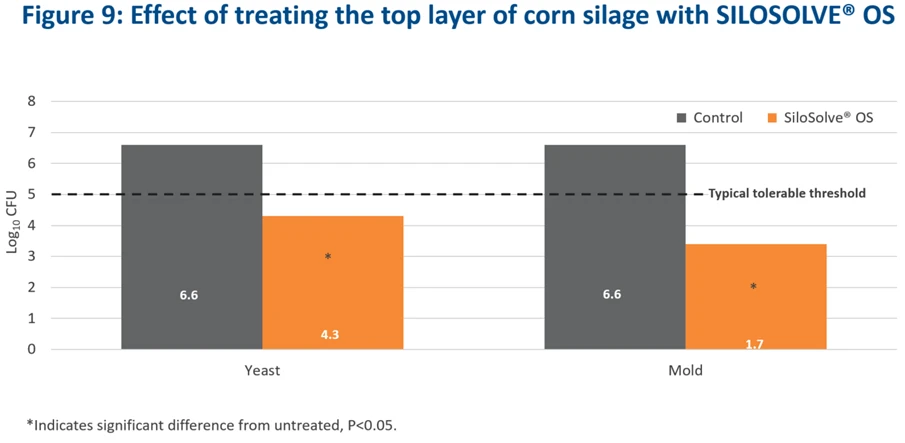
Results from nine farms consistently showed reduced levels of mold and yeast in corn silage treated with Silosolve® OS inoculant. The bacterial strains created the optimal condition for the sodium benzoate to keep spoilage microorganisms in check and the value of your silage well preserved.
Silosolve® OS inoculant keeps the top layer stable
Silosolve® OS inoculant effectively improves aerobic stability by reducing yeast and mold growth in a variety of crops. Aerobic instability can be described by a temperature increase above ambient. The longer it takes silage to surpass 5.4°F above the ambient temperature, the more stable it is. Forages ensiled with Silosolve® OS inoculant are more stable than untreated silage.
What’s inside Silosolve® OS inoculant
Silosolve® OS inoculant contains two fast-growing and competitive lactic acid bacteria, plus a unique strain of Lactococcus lactis O224. This combination effectively removes residual air and speeds up the fermentation processes. The rapid establishment of anaerobic conditions and a reduced pH, creates the perfect conditions for the anti-fungal sodium benzoate to be most effective. This unique combination inhibits growth of yeast and mold in the difficult to compact top layer, resulting in improved aerobic stability at feed out.
Silosolve® OS inoculant is ideally suited for top layer protection of all ensiled crops, especially those ensiled at higher than ideal dry matter.
Biomax®
A versatile inoculant to enhance fermentation
Starter/finisher technology
The starter/finisher strain technology has formed the backbone of our most successful fermentation products. Biomax® inoculant takes this technology to its maximum by providing two dedicated strains at equal rates. The benefits are exceptionally fast fermentation of both corn and more difficult to ferment crops, such as grasses.
Strong performance in corn silage – and more difficult to ferment crops
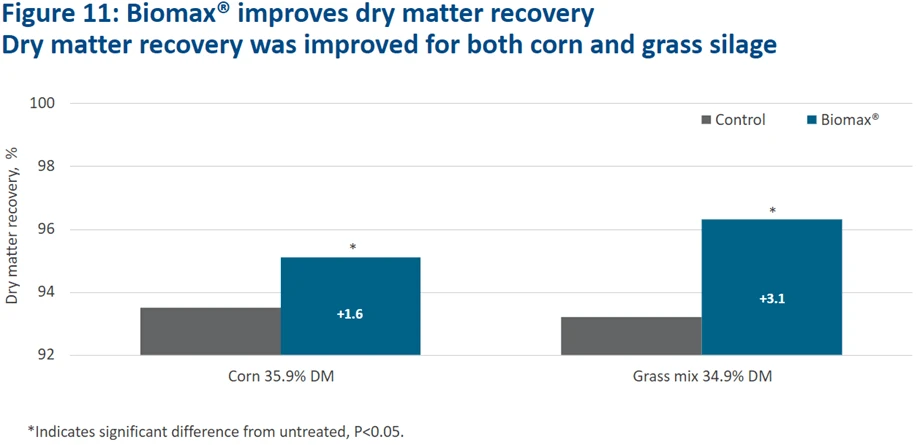
Biomax® inoculant brings corn silage to the safe zone (pH) in just 2 days of fermentation. A rapid pH reduction is critical to obtain control of the natural spoilage organisms present on the crop. The benefit is improved dry matter recovery as well as nutrient preservation.
Improved fermentation and better quality forage
An effective fermentation leads to better nutrient preservation and improved quality of forage. Biomax® inoculant delivers exactly this.
What’s inside Biomax®
Biomax® combines our fastest fermentation initiator Enterococcus faecium k20602 with the well proven Lactobacillus plantarum 6072.
Inoculant Quick Tips
✓ Use: Carefully read and follow all label directions for optimal use and performance.
✓ Storage: Store in original unopened canister in a cool, dry location. Once opened, maximize shelf-life by storing in a refrigerator with
lid tightly closed.
✓ Water quality: If you can drink it, it is acceptable for inoculants.
✓ Water temperature: Maintain water temperature below 100°F for optimal effectiveness.
✓ Once mixed, discard unused inoculant after 48 hours.
✓ Rinse applicator well between uses.
✓ Clean and sanitize applicators regularly, especially before storage.
S.A.F.E. (Silage Inoculant/Application/Feed/Employees)
Silage Inoculant
Properly store according to label.
- Novonesis silage inoculants can be stored at room temperature for up to 24 months. Properly mix according to manufacturer’s recommendation.
- Use the Silosolve® S.A.F.E. mixing bucket to whisk with cool water
Application
Apply to the feed according to label directions to enhance silage fermentation.
- Use a Silosolve® S.A.F.E. DE 1008.5 applicator on the chopper
Applicator must be routinely maintained and regularly cleaned and completely sanitized for application success.
Feed
Feed should smell fresh, be cool to the touch, and free of spoilage microorganisms and contaminants.
The Silosolve® S.A.F.E. Kernel Processing Cup can be used to monitor KPS (Kernel Processing Score) of corn silage during harvest. Uncracked kernels = less milk. Check the roller settings several times during harvest.
Employees
Making and feeding silage can be dangerous. Follow internal safety policies and review the silage-specific safety guidelines established by the Bolsen Safety Foundation (https://pubmed.ncbi.nlm.nih.gov/29685281/)
The eight areas of silage safety awareness:
✓ Fatigue
✓ Complacency
✓ Truck and tractor rollover
✓ Fall from height linklink
✓ Equipment entanglement
✓ Avalanche or silage collapse
✓ Silage gases
✓ Drug and alcohol abuse


Learn more about S.A.F.E
Contact us to hear more about our solutions
To view this form, update your cookie preferences
This form is hidden because Marketing Cookies are turned off. You can enable them in your cookie settings to continue.