Heat-stress in cattle: how biosolutions help cool the pressure
Heat stress is not simply an environmental challenge. It is a metabolic disruption that forces the dairy cow into a two-sided crisis at exactly the moment she can least afford it. In this issue of The Biosolutions Brief, we will explore the topic of heat stress and what role biosolutions can play in helping you feed smarter while cooling down the pressure.
Why is heat stress more than a temperature problem?
Heat stress is not simply an environmental challenge. It is a metabolic disruption that forces the dairy cow into a two-sided crisis at exactly the moment she can least afford it.
Heat stress creates a dual metabolic penalty in dairy cows.
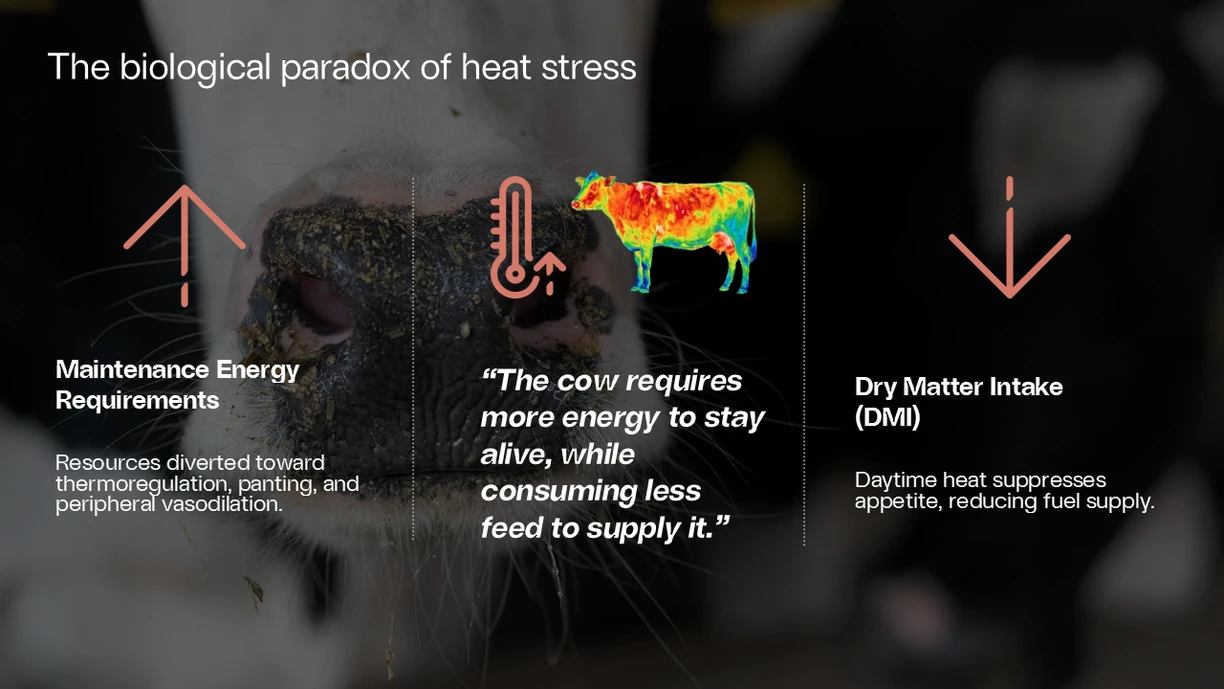
On one side, maintenance energy requirements rise sharply as the cow diverts nutrients and metabolic resources toward thermoregulation. Panting, peripheral vasodilation, sweating, altered behavior, and increased physiological work all consume energy that would otherwise support milk synthesis, immune resilience, reproductive function, and rumen function.
At the same time, Dry Matter Intake (DMI) falls, reducing the cow’s nutrient and energy supply precisely when demand is increasing.
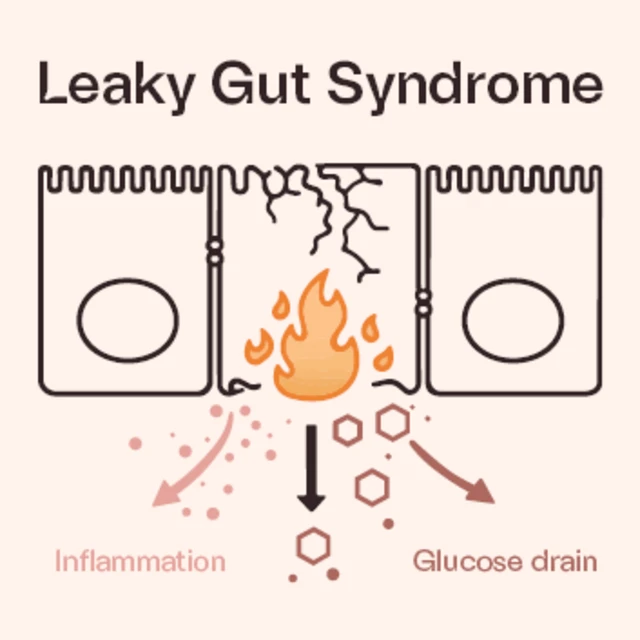
To make matters worse, heat stress can also compromise intestinal barrier integrity leading to the occurrence of the hyperpermeable gut syndrome (“leaky gut”), triggering inflammation, and redirecting additional nutrients away from productive functions.
This is the defining contradiction of heat stress: the cow needs more energy to remain physiologically stable, while consuming less feed to supply it. The result is an immediate pressure on energy balance, nutrient availability, gut health, and production efficiency. Under these conditions, every kilogram of feed becomes more valuable, and every missed opportunity for nutrient extraction becomes more costly.
When intake shifts, rumen risk rises.
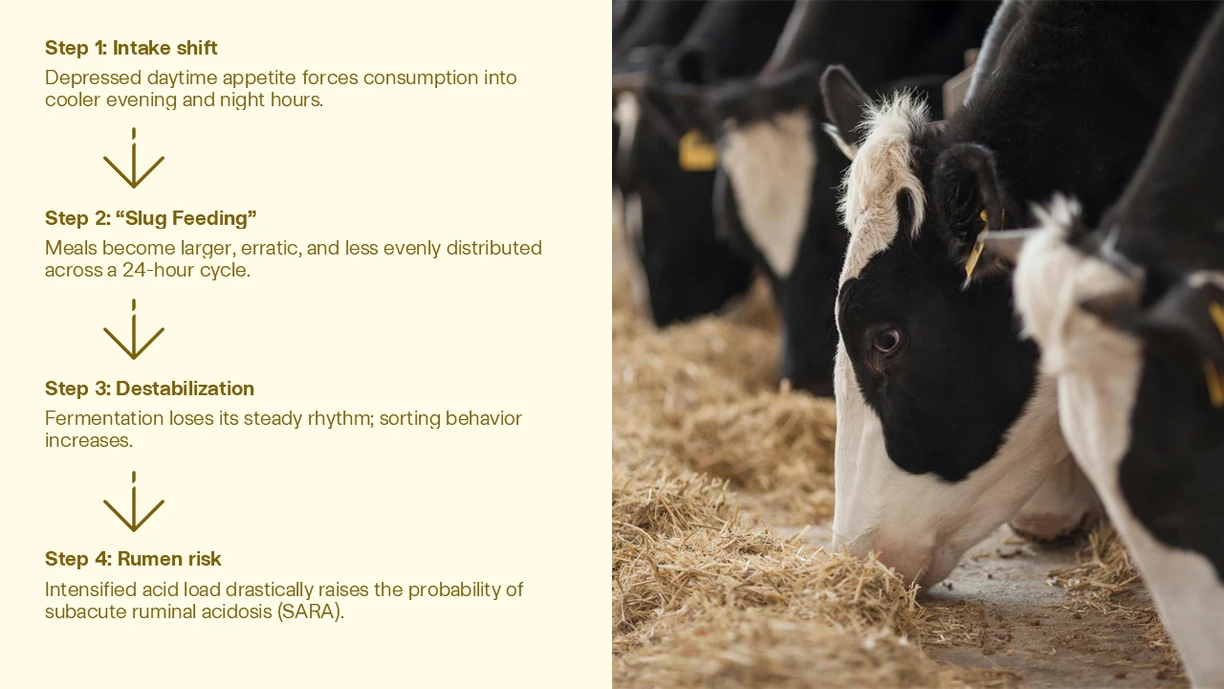
Heat-stressed cows do not just eat less. They eat differently.
As daytime heat suppresses appetite, cows often shift intake into cooler evening and night hours. That behavioral adaptation may help preserve some consumption, but it creates a new nutritional risk: larger, less evenly distributed meals. This “slug feeding” pattern can destabilize rumen fermentation, intensify the acid load, and increase the risk of subacute ruminal acidosis.
At the same time, sorting behavior may increase, saliva buffering may become less effective relative to acid production, and rumination patterns may change. The cow is no longer operating under a steady fermentation rhythm. She is operating under a disrupted intake pattern, with a greater risk of pH instability and less margin for error in ration design.
That makes rumen stabilization a core heat-stress priority, not a secondary one.
Nutritional mitigation must do multiple jobs at once
An effective heat-stress ration cannot focus only on replacing lost intake. It must also reduce metabolic burden while protecting rumen function.
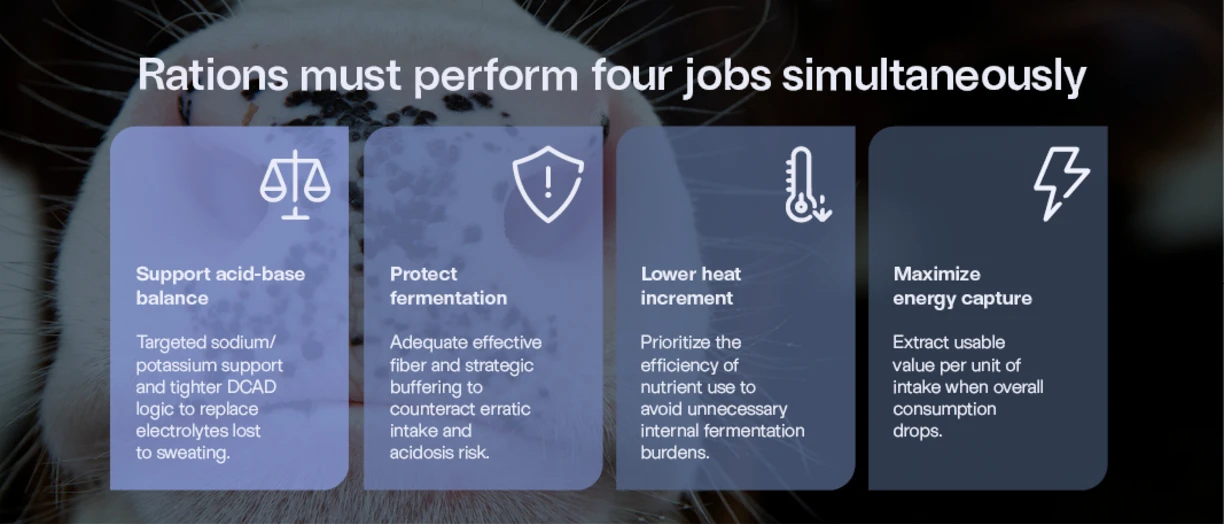
That means nutritional mitigation should aim to do four things simultaneously:
- Support acid-base and electrolyte balance
Heat-stressed cows lose more potassium and sodium through increased sweating and physiological adjustment. Rations often need tighter attention to DCAD logic, targeted sodium and potassium support, and buffer inclusion to help maintain systemic and ruminal stability.
- Protect rumen fermentation
Because intake behavior becomes more erratic, the ration must be more forgiving. Avoiding high forage diet to secure adequate effective fiber, controlled fermentability, proper mixing of the TMR, and strategic buffering become essential to reduce acidosis risk and maintain rumen consistency.
- Lower the internal heat increment of digestion
Not all nutrients impose the same metabolic cost. During heat stress, ration design should prioritize efficiency of nutrient use and avoid unnecessary fermentation burden where possible, while still protecting milk components and rumen health. Use high quality fiber and high energy dense ingredients such as rumen-protected fat.
- Maximize energy captured from every kilogram consumed
This becomes the central economic and biological question of summer feeding: when cows eat less, how can the ration deliver more usable value per unit of intake?
The Bacillus efficiency factor
This is where Bacillus probiotics become strategically relevant.
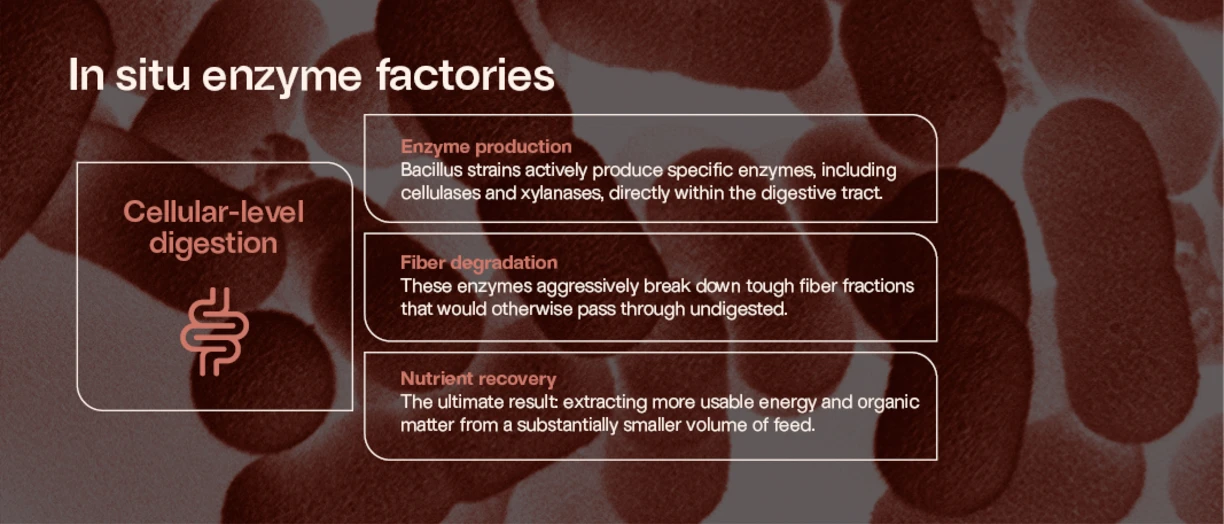
Their role under heat stress should not be oversimplified. Bacillus strains are not a direct cooling technology. Their value is different and arguably more important from a nutritional standpoint. They function as in situ enzyme factories within the digestive system.
Bovacillus™ probiotic produces enzymes such as cellulases and xylanases, supporting the degradation of fiber fractions and improving the cow’s ability to recover nutrients from the ration.
In practical terms, this means a greater chance of extracting more usable energy and organic matter from a smaller amount of feed, which, under heat stress, matters enormously.
If intake is depressed, the nutritional objective shifts from simply feeding cows to helping cows recover more value from what they still consume.
Why digestibility matters more in summer?
In a thermoneutral cow, better digestibility is always valuable.
In a heat-stressed cow, it becomes critical.
When DMI drops, the margin for nutritional inefficiency disappears. Any technology that helps improve NDF digestibility or overall organic matter utilization becomes more strategic because it supports the cow’s capacity to derive more energy from each kilogram of feed that reaches the rumen.
Why Bacillus probiotics?
During heat stress, Bacillus probiotics can be understood as part of a broader nutritional resilience strategy:
- Not a replacement for cooling infrastructure
- Not a substitute for correct electrolyte balancing
- Not a fix for overcrowding or poor feeding management
But as a complementary digestive efficiency tool that helps protect feed value when intake is compromised.
That is especially relevant when the ration must carry more functional weight:
- When cows bunch intake into fewer meals.
- When using high density ingredients such as fat.
- When nutrient losses become more expensive.
- When every liter of milk depends on better conversion from a smaller nutrient supply.
Take-home message
- Heat stress creates a dual metabolic crisis: The cow’s maintenance energy requirement rises just as feed intake falls.
- That combination destabilizes energy balance, challenges rumen ecology, and narrows the margin for nutritional error.
- The response must therefore be multidimensional: electrolyte correction, acid-base support, buffering, fermentation control, and a deliberate effort to reduce digestive inefficiency.
- Within that framework, Bacillus probiotics offer a valuable mode of action. By acting as in situ enzyme factories and supporting fiber and organic matter digestibility, they help the cow extract more from less. And under heat stress, that may be one of the most important nutritional advantages of all.
Ready to unlock the answers from inside?
Fill out the form below and one of our experts will be in touch shortly.
To view this form, update your cookie preferences
This form is hidden because Marketing Cookies are turned off. You can enable them in your cookie settings to continue.