Biodiesel feedstock pretreatment
Solving the FFA challenge for greater feedstock flexibility
For biodiesel producers, maintaining efficiency and profitability hinges on one key factor: feedstock flexibility.
The ability to process a wide range of raw materials—whether vegetable oils, waste oils, or animal fats—is critical for navigating fluctuating costs and availability in the market. However, traditional biodiesel production methods are limited by a significant challenge: high levels of free fatty acids (FFA) in certain feedstocks. These impurities restrict flexibility and complicate production, making it difficult for producers to remain competitive. To address this, cost-effective pretreatment processes are essential to optimize feedstocks and ensure smooth biodiesel production.
Traditional biodiesel is produced by the transesterification reaction of glycerides - from vegetable oils, waste oils, and animal fats - with methanol to form fatty acid methyl esters (FAME). Unfortunately, when feedstocks contain elevated levels of FFAs, the alkaline-catalyzed transesterification process becomes less efficient. FFAs react with the catalyst to form soaps, reducing yields and resulting in operational challenges.
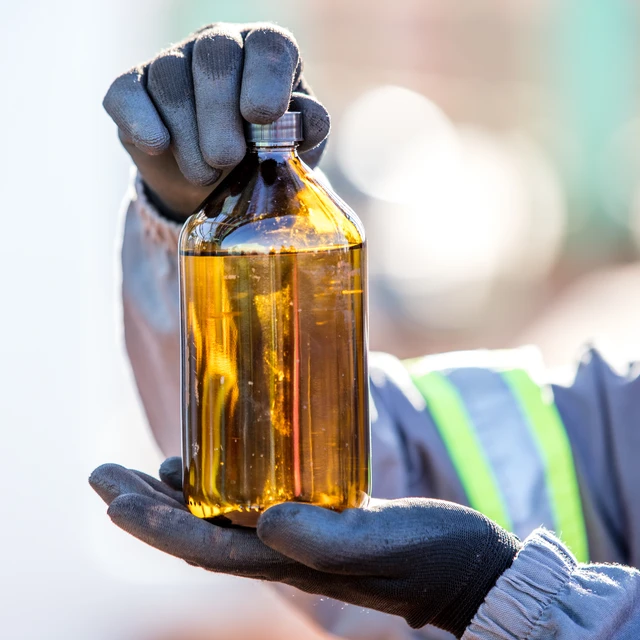
To ensure that feedstocks with higher FFA concentrations can be processed profitably, FFA should be reduced to below 0.2% before transesterification. This specification presents producers with both a challenge and an opportunity for innovation.
Read more in the full technical article
In this article co-written by Novonesis’ Senior Scientist Rasmus Bøg Alstrup, Global Business Development Manager Mads Agerskov Pedersen and BR Process’s Lucas Klettenhofer, five technologies for reducing FFA were discussed: stripping/deodorization, chemical neturalization, glycerolysis, acid esterification and a new enzymatic process with Novonesis’ Eversa® Advance.
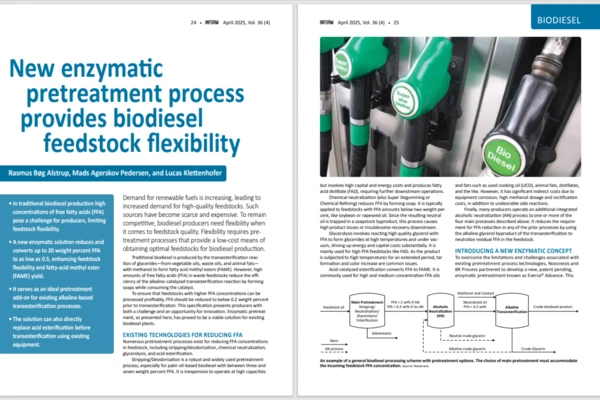
It dives into the FFA operating ranges and costs of each technology and provides a detailed explanation of the feedstock pretreatment process with Eversa® Advance.
It was first published in the April 2025 edition of Inform magazine by American Oil Chemists’ Society (AOCS).
Meet the authors
Rasmus Bøg Alstrup
Rasmus is a chemical engineer who started his career in the field of oils and fats processing five years ago. He was a commissioning engineer at Alfa Laval, then joined Novonesis’ as an application research scientist.
“I thrive knowing that my time is spent inventing solutions that make the world a better place - especially by reducing carbon emissions.”
Mads Agerskov Pedersen
As Global Business Development Lead for Biodiesel, Mads spends his time understanding customers and market trends to bring innovative solutions to biodiesel producers. He joined Novonesis in 2021 and has 10 years of experience from various financial, strategic, and commercial roles.
”I enjoy bridging the amazing capabilities Novonesis has within enzymes, with the needs of biodiesel producers, to bring new innovation to the industry and increase impact of biosolutions for the benefit of our customers and the planet.”
Lucas Klettenhofer
Lucas is a partner at brProcess, an industry technology partner of Novonesis. A chemical engineer by training, Lucas has more than fifteen years of experience supporting customers in oils and fats processing.
What could this mean for your business?
Fill in the form below and we’ll be in touch.
To view this form, update your cookie preferences
This form is hidden because Marketing Cookies are turned off. You can enable them in your cookie settings to continue.