Cheese
How to improve cheese yield with starter cultures and coagulants
Pasta filata accounts for approximately 22% of global cheese production. At 5.6 million tonnes produced annually and a projected annual growth of 2% to 4% by 2030, this expanding market presents a clear opportunity for cheesemakers who can meet the rising demand.
The hurdles that prevent you meeting demand
The obvious way to meet the demand is by expanding production capacity so you can increase your milk inputs. However, such expansion typically involves significant capital expenditure, long installation timelines and, in many cases, physical plant expansion. It increases your energy and water costs as well as any potential costs associated with emissions. And if you operate in a region where the milk pool is shrinking, increasing your milk inputs might not be a viable strategy. But what if there was a way to increase your outputs with no increase in production capacity or milk inputs?
High-yield culture-coagulant pairings
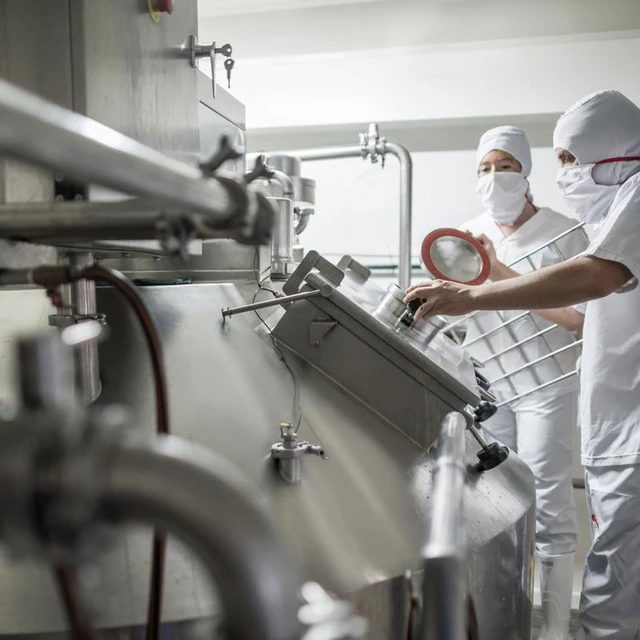
With a starter culture and coagulant pairing specifically developed to optimize solid retention and allow higher moisture levels, you can achieve mozzarella yield increases within the limits of your existing production capacity and milk inputs. These optimized pairings allow you to produce more cheese with the same amount of milk and no significant increase in your utility spend, your emissions, or labor needs. And if you're in a region where the milk pool is highly constrained, you can use these high-yield pairings to produce the same amount of cheese with less milk.
The pasta filata challenge: balancing yield and functionality
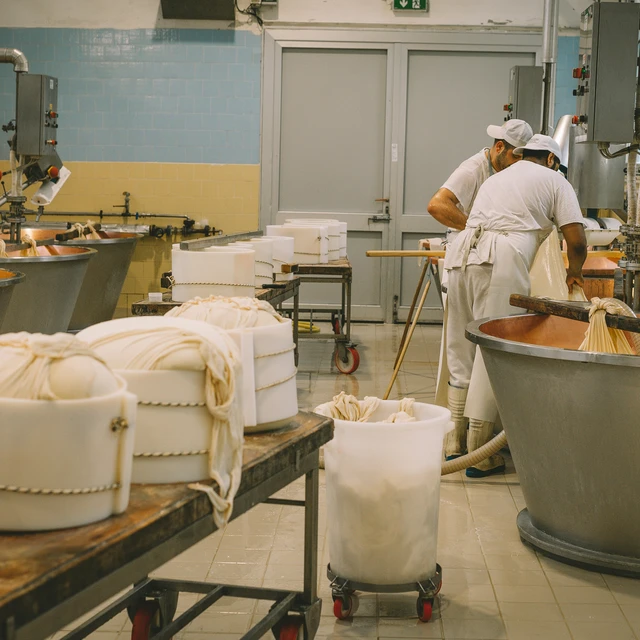
High-mechanical-stress processes including stretching, scalding and pumping often reduce yields. Furthermore, strict functional targets for melt, stretch, browning, shreddability and sliceability restrict how far you can push moisture levels without risking defects. Because half of all mozzarella is used on pizza1, consistent functionality is essential for your brand reputation and market share.
How to increase mozzarella yield with starter cultures
When you're looking for ways to increase mozzarella yield, culture choice is a powerful lever. Starter cultures directly influence moisture retention without compromising product functionality. The right culture delivers fast, predictable acidification to reduce make-time and quality variation. It also delivers strong water binding to increase yield and throughput. As expected, these benefits come with no negative impact on your whey stream.
Why your choice of coagulant matters just as much
Pairing the right starter culture with a highly specific coagulant drives optimal yield improvements across moisture, fat and protein. These coagulants build a stronger casein network. A stronger casein network produces a firm cheese curd, which retains more fat and protein while also being more resistant to mechanical stress during pumping and stretching to reduce cheese fine losses into the whey. High specificity also speeds up coagulation so you can process more milk in less time. Additionally, the exact right coagulant minimizes proteolysis. This extends shelf life and improves machinability and functionality for pasta filata cheeses even at increased moisture levels, thereby providing a competitive differentiation in a crowded market.
Find the right combination to unlock functionality at scale
Growing demand for pasta filata, coupled with increased consolidation of manufacturing sites, means each site needs to extract maximum value from every component of every drop of milk. It is well known that seemingly small losses like cheese fines in whey or low casein recovery have a significant economic impact on your operations. Therefore, any combination of solutions that increases retention of solids as well as moisture without additional milk inputs or capacity expansions delivers clear financial gains.
With this in mind, the question is not how to improve cheese yield with starter cultures. It's how to find the right combination of cultures, coagulants and technology to unlock next-level yields — while of course maintaining desired machinability and functionality.
Explore our yield-boosting culture-coagulant combinations for Pasta Filata
By Mathias Olofsen, Global Marketing and Business Development Manager, Pasta Filata, Novonesis
Mathias drives strategy and product development for the Pasta Filata cheese segment at Novonesis. With an MSc in Food Science and Technology specializing in Dairy Science, he pairs technical expertise with commercial experience gained through roles at Novonesis, Chr. Hansen, and Arla Unika. His background spans both dairy innovation and hands-on food industry operations, giving him a well-rounded perspective on cheese technology and market needs. Follow Mathias on LinkedIn.