Let’s power India from within
Why depend on imported oil and gas when India can grow its own future with biosolutions?
India’s ambition of
self-reliance is in a decisive phase
India imports 87% of its crude oil for transportation*, 60% of its liquefied petroleum gas (LPG) for cooking* and 50% of its natural gas for transportation, heating and industrial purposes.
But there is another way. Using biosolutions – microbes and enzymes – India can make the most of home-grown solutions like bioethanol and biogas to help replace fossil based solutions.
Biosolutions lead the way towards energy resilience
India’s path to energy resilience depends on getting more value from domestic biomass, faster and at scale. Biosolutions help accelerate the use of biomass by turning crops, residues, and waste into fuels, materials, and chemicals with lower energy use and higher efficiency.
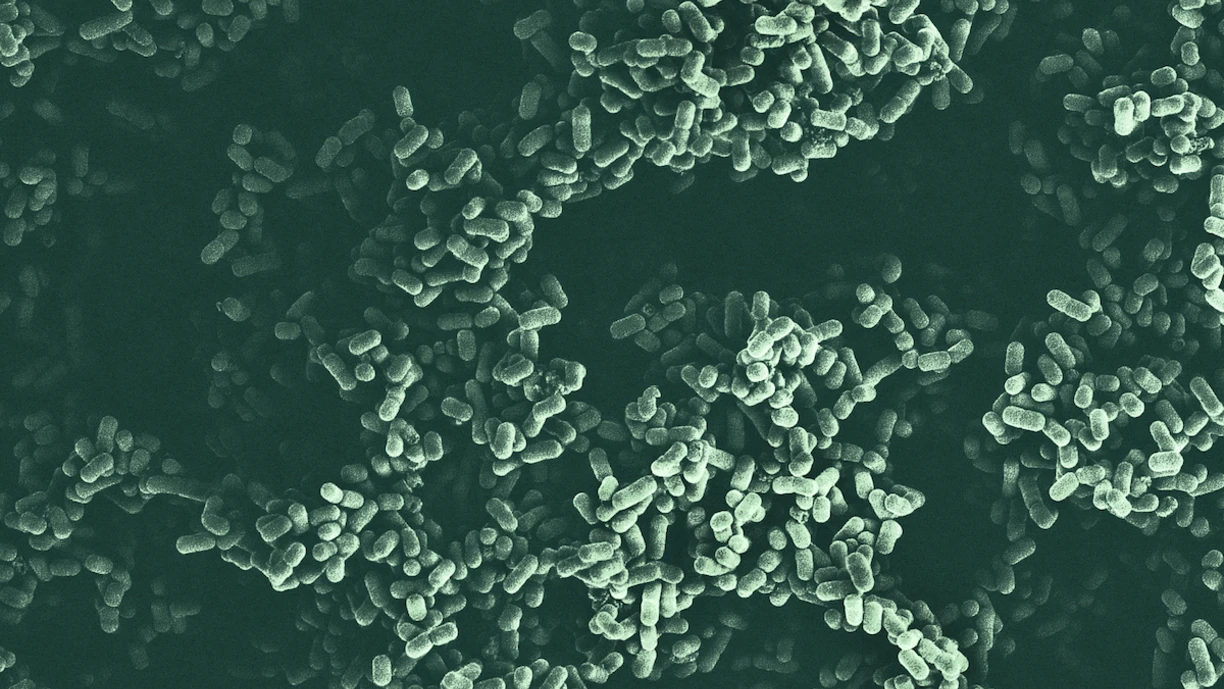
Biosolutions can improve:
Ethanol production by increasing ethanol yields by up to ~3% and reducing fermentation time by ~25%.

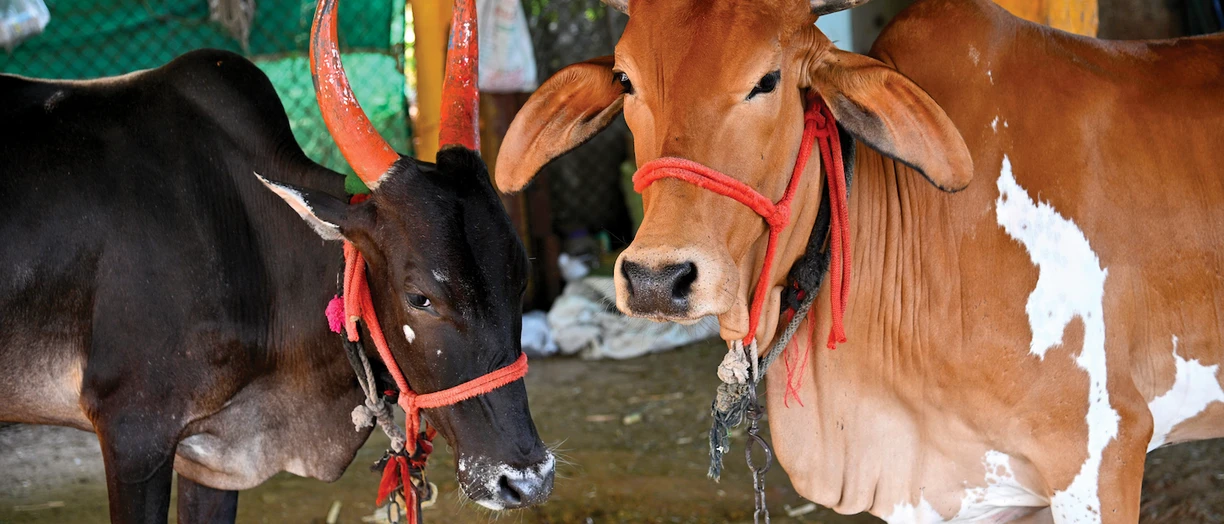
Biogas production by increasing methane yield by up to +33% (food waste), +17% (cow dung) and +20% (rice straw).

Agriculture by enabling ~25% reduction in phosphorus fertiliser use and up to ~40% replacement of synthetic nitrogen.

Animal farming by e.g. enabling 1.5 billion more eggs annually in India (approximately 50% of current egg exports from India).
Every day products by replacing chemicals. For instance in modern detergents, enzymes replace or significantly reduce the need for fossil‑based surfactants and builders by up to 30%.

India’s biofuel ecosystem is already delivering impact
India’s world‑leading biofuel mandates are strengthening the nation’s energy resilience. Even better, the shift to bioenergy is unlocking multiple additional benefits. Here are a few examples, and this is only the beginning of what home‑grown solutions can accomplish.
Why India’s energy resilience
starts within
The era of biosolutions is here. Krishna Mohan Puvvada explains how leveraging domestic biomass allows us to break the cycle of import dependence - unlocking the technology, capability and ecosystem needed to build energy resilience.
Play the video below to hear the full insights from Mohan.

The time for biosolutions is now
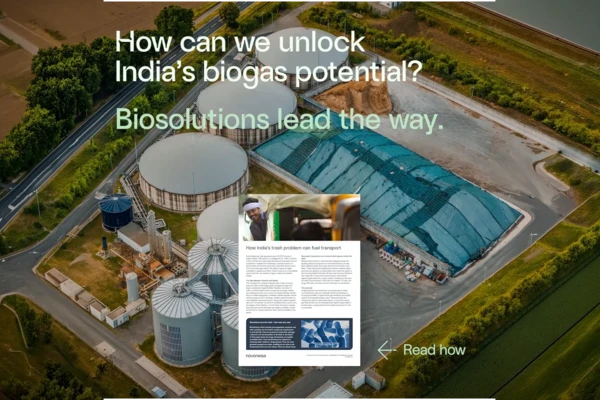
Every single day, India generates about 90,000 tonnes of organic waste. Biosolutions holds the key to unlocking this untapped energy as biogas.
See the impact in our biogas case study
Featured case studies: Turning potential into proof
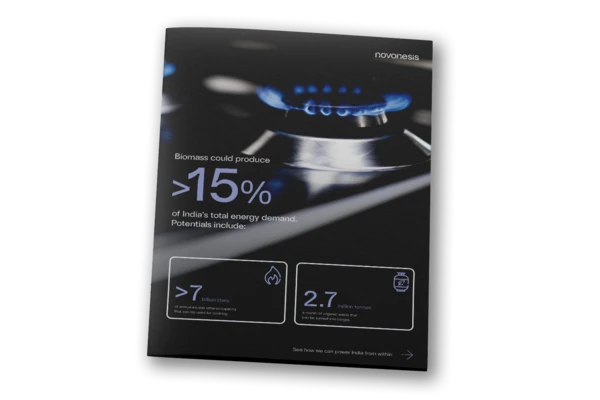
Let’s use ethanol for cooking. Let’s use biogas for transport. Let’s build a more resilient agricultural system. These are just a few examples of how biosolutions can help reduce India’s reliance on imported energy. See the impact in our four case studies.
India’s energy security starts at home
From excess ethanol capacity to waste-based biogas, India has the potential to let home-grown solutions reduce reliance on imported oil and gas.
Powering Indian kitchens with home-grown, clean energy
Who doesn’t love the rich, comforting flavors of slow-cooked biryani? However, India’s reliance on imported liquefied petroleum gas (LPG) is becoming a challenge.
The good news? By producing 6.4 billion liters of ethanol*, we could replace all LPG in commercial kitchens—and India already has 7-8 billion liters of available ethanol capacity to make this a reality*.
This would, however, among other things require a change in kitchen-stoves.

Driving India forward with home-grown biogas
Close to 50% of India’s total natural gas consumption comes from imports feeding into manufacturing, transportation and agriculture*.
India can blend its home-grown biogas produced from waste into compressed natural gas (CNG) for transportation. Biogas can also be blended with piped natural gas (PNG) for cooking.

Your everyday products are also dependent on fossil resources
Most people frame fossil dependence as a fuel problem. But it runs much deeper. Fertilizers, petrochemical intermediates, industrial raw materials — vast portions of Indians’ everyday products still depend on imports that could be produced at home.
Reducing fossil based fertilizers with biologicals
Fertilizers are essential for feeding us all, but we can reduce our reliance on imported, fossil based options by using beneficial biosolutions.
Studies show a significant yield improvement when pairing fertilizers with microbes and e.g. a 25% reduction in the need for phosphorus*.

Saving chemicals with biosolutions
Did you know that a substantial part of a detergent’s ingredients can come from fossil materials? By adopting biosolutions, manufacturers can significantly cut reliance on these ingredients.
While data for India is unavailable, our study estimates that if 50% of all washes in Latin America used enzyme-rich detergents with 30% less fossil based ingredients, it could save the planet from 50,000 tonnes of chemicals annually*.

This is a power plant
Instead of relying on imported, limited resources, biosolutions tap into what’s already around us: renewable resources such as plants, crop residues, and agricultural waste to power India from within.
Biosolutions break the organic matter into its different components and use each component in the most efficient way – to provide home-grown alternatives to oil and gas products.

Corn kernels
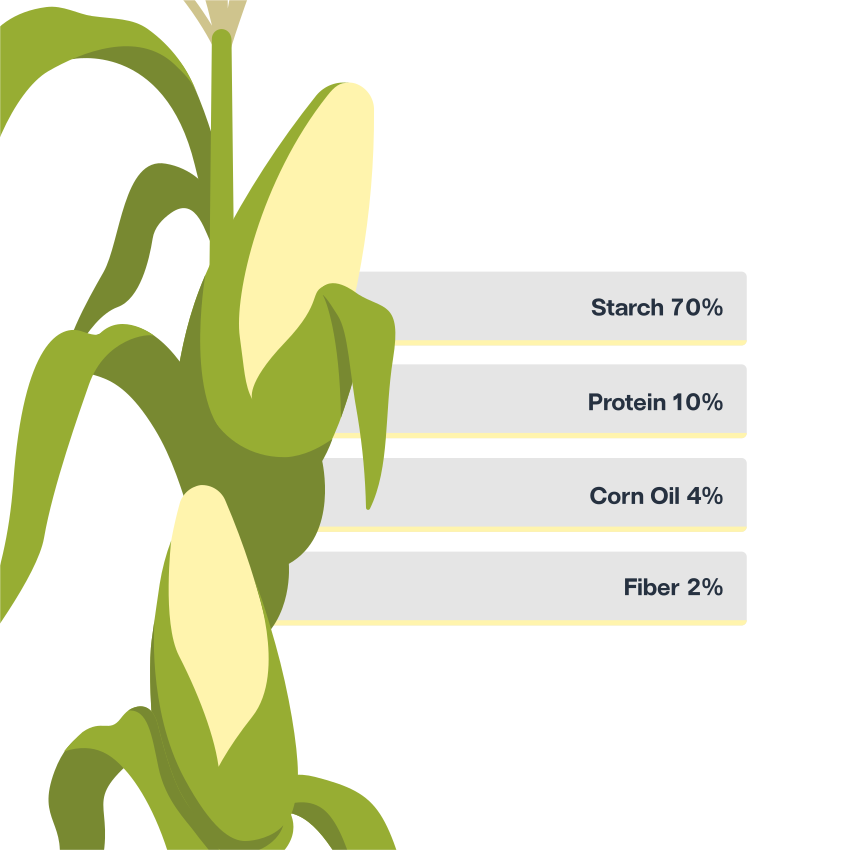
The corn kernel contains many parts, each can be extracted and turned into different revenue streams:
Starch 70% - Used for transport fuel (ethanol). It is also be used for sweeteners (corn syrup) in food and beverage.
Protein 10% - Used for high quality feed for animals.
Corn oil 4% - Used as feedstock for renewable diesel.
Fiber 2% - Used for high quality cellulosic fuel.
Stover / Stork
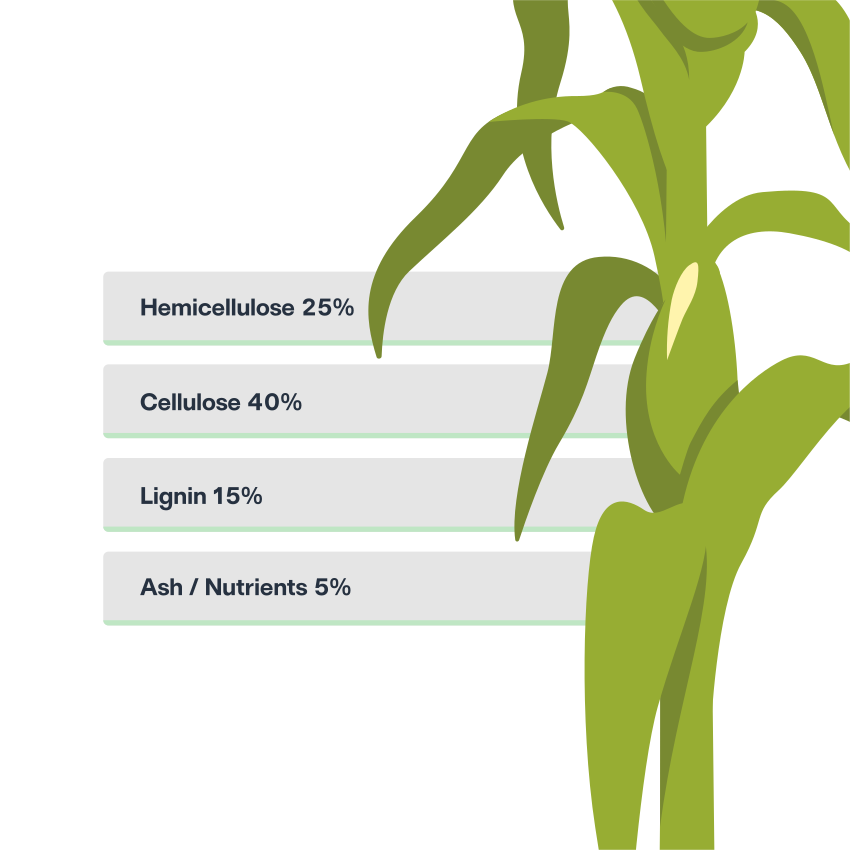
The stover and stork contains many parts, each can be extracted and turned into different revenue streams:
Hemicellulose 25% & Cellulose 40% - Can be used for biomass-based fuels. Just like with starch, and potentially even for green chemicals.
Lignin 15% - Can be used to generate electricity and heat for facilities. Can potentially be mixed with ethanol to make green shipping fuels.
Ash / nutrients 5% - Can be used for feed production, upgrading the quality of the feed.
Explore how biosolutions reduce reliance on fossils
Explore this issue of the Biosolution Bulletin that explains how the dark, thick liquid extracted from wells dug deep into the Earth until now has powered our cars, fueled our aeroplanes, and kept our ships moving across the oceans – and how biology is now changing the game.

The future, delivered monthly
Want more? From deep-dives into new tech to visions of a bio-based future, The Biosolutions Bulletin delivers the latest innovations directly to your inbox every month.
Sign up to stay ahead
To view this form, update your cookie preferences
This form is hidden because Marketing Cookies are turned off. You can enable them in your cookie settings to continue.
Get the latest insights on how to better our world with biology
Welcome to the world of biosolutions and Novonesis - the latest news, the biggest insights and a glimpse into the life of the worlds leading biosolutions partner.
Review the data and research behind India's transition to biosolutions.