Let’s power South Africa from within
Why rely on imported oil and products when South Africa can grow an energy resilient sustainable future with biosolutions?
Driving South Africa’s shift from energy volatility to vitality
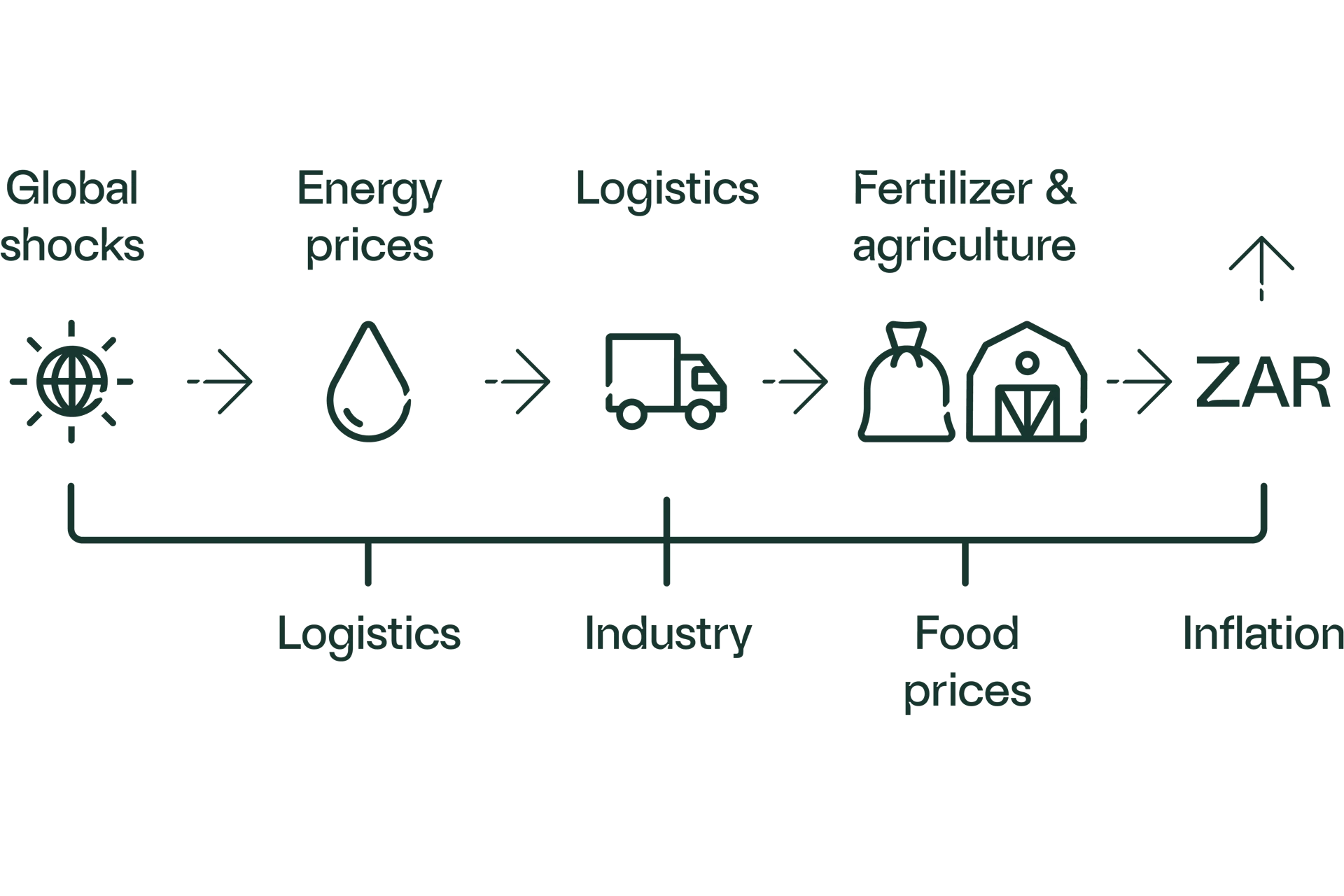
South Africa remains exposed to global energy volatility importing around 90% of its crude oil and majority of its finished fuels, alongside reliance on imported fertilizers. This creates a system wide vulnerability across the South Africa economy.
But another path exists complimenting the efforts towards energy security. Looking inward towards home grown solutions like bioethanol and biogas can reduce reliance on fossil-based imports strengthen energy security, and enhance an economy that is secure, competitive, sustainable and resilient while supporting agricultural and food systems. Unlocking the potential of alternative feedstocks will be key to making this transition a reality and responsive to dynamic energy landscape
Biosolutions can act as the critical enabler that unlocks local value, reduces external dependency, and strengthens.
It’s a ripple effect that impedes the core of South Africa’s economy
South Africa already has the foundational bio-based policies
With rising vulnerability and global shocks, the existence of these policies is more important now than ever.
Biofuels industrial strategy (BIS)
Foundational policy of 2007 intended to enhance energy security and create jobs in the energy crop and biofuels value chain.

Just Energy Transition (JET IP) policy
Targeting low carbon, diversified energy mix, climate resilient economy, attract investment and create jobs.
South African Biofuels Regulatory Framework (BRF) 2020
Blending mandates minimum 2% bioethanol in petrol and 5% biodiesel in diesel targeting 4.5% of national fuel pool.

Regulated biofuels price
The 2025 gazette sets the regulated biofuels price as part of the initial phases of implementing the framework.
It’s time to tap into the potential of feedstock for energy security and agricultural development
Unlocking the potential of feedstock like sorghum to bioethanol through biosolutions enhances crop performance and conversion efficiency, enabling higher yields and improved fermentation outcomes.
Why sorghum may be a viable feedstock option?
- Drought resilience
- Water efficiency
- Multi-use crop
targeted potential new job opportunities across farming at a 2% biofuels inclusion rate as per the biofuels industrial strategy. And that’s biofuels alone!
tons of sorghum was produced from 41,150 hectares in 2025, showing a domestic feedstock base.
tons of sorghum can produce 175m liters of bioethanol to enable a 2% blend in petrol (approx.)
Scaling to meet this bioethanol demand would need ~134,000 hectares of sorghum 3x current and this would potentially lead to creation of more jobs.
Powering South Africa’s progress from policy to action by leveraging domestic resources
South Africa has a strong policy base. Now is the moment to bring it to life through confident implementation. Reducing reliance on imported fuels opens the door to greater energy security and resilience.
Driving South Africa’s energy resilience and economy with home-grown biofuels
One of the answers to reduce the dependence on imports grows in South Africa: Sorghum. Together with other types of biomass, sorghum can be turned into bioethanol and blended into our fuel and used across industries. With South Africa’s key sector transport relying heavily on imported crude oil and fuels, blending bioethanol into existing fuel systems can reduce reliance and enhance energy security.
Implementing the biofuel policies and increasing blending levels over time can meaningfully impact the circular economy:
- Increase in agricultural development
- Potential employment opportunities especially in rural areas
- Stimulate new investments
- Reduced import reliance and increase energy system stability
- Lower inflation and forex risks
- Reduce GHG emissions

Fueling what moves the economy in South Africa
From waste to energy. With a 5% biodiesel blending mandate, South Africa has the policy foundation to decarbonize. Used cooking oil in addition to other biodiesel feedstocks, provides an untapped potential feedstock that can be converted into biodiesel. Industry estimates suggest between ~600 and ~800 tons of used cooking oil is generated daily in South Africa. Biosolutions can help scale biodiesel from waste oils addressing waste management and contributing to energy security.
Why implementing the biodiesel blending guidelines matters:
- Immediate impact in existing diesel engines and infrastructure
- Decarbonizes hard to abate sectors
- Reduced fuel import reliance
- Integrates agriculture and energy
- Expand local value chains
Powering South African agriculture with biosolutions
South Africa’s reliance on imports for over 80% of its fertilizer needs exposes a major food security risk. This risk further increases especially with 70–80% surge in natural gas prices driving nitrogen fertilizer costs raise input costs and food prices, further worsened by logistics disruptions.
In this context, resilient solutions are critical. Alternatives such as feedstock, when combined with biosolutions that improve nutrient efficiency and yields, can reduce dependence on costly inputs. Unlocking sorghum can strengthen food systems, boost farmer resilience, and support a more sustainable, self-reliant agricultural sector.
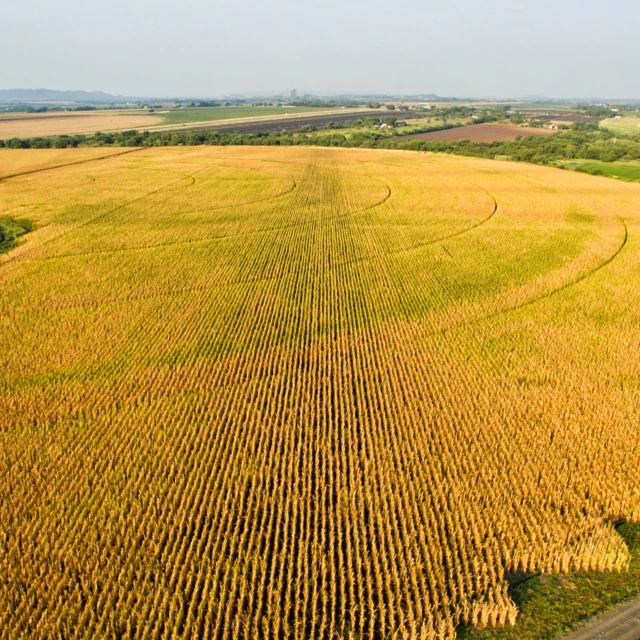
The strength is in the soil
Fertilizers are a crucial input in the success of agricultural development and food security. However, South Africa relies on imports for majority of its fertilizer and fertilizer input needs exposing agriculture sector to global shocks. resilient solutions are critical. Alternatives such as feedstock, when combined with biosolutions that improve nutrient efficiency and yields, can reduce dependence on costly inputs
Leaves a sustainable impact through:
- Higher productivity and efficiency
- Less exposure to global market shocks
- Stronger and resilient soils to sustain agriculture
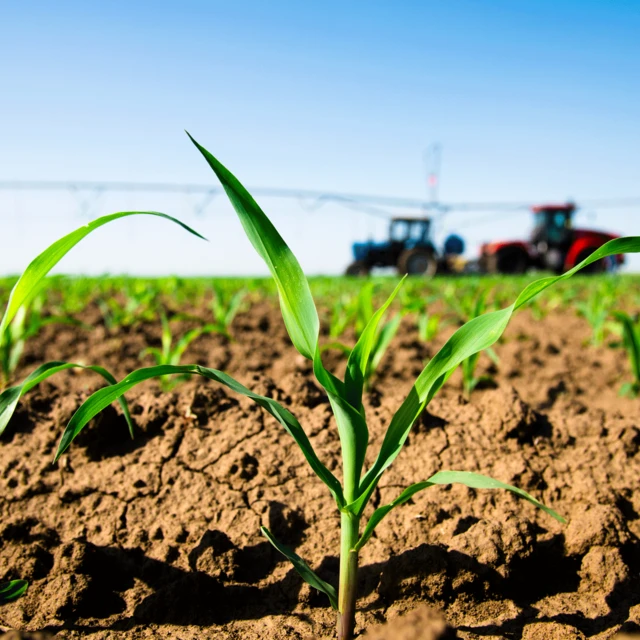
This is a resilient plant
Here’s why. Sorghum is naturally adapted to South Africa’s conditions drought resistant, efficient in water use and is a multi use crop. This make it a viable feedstock option for South Africa.
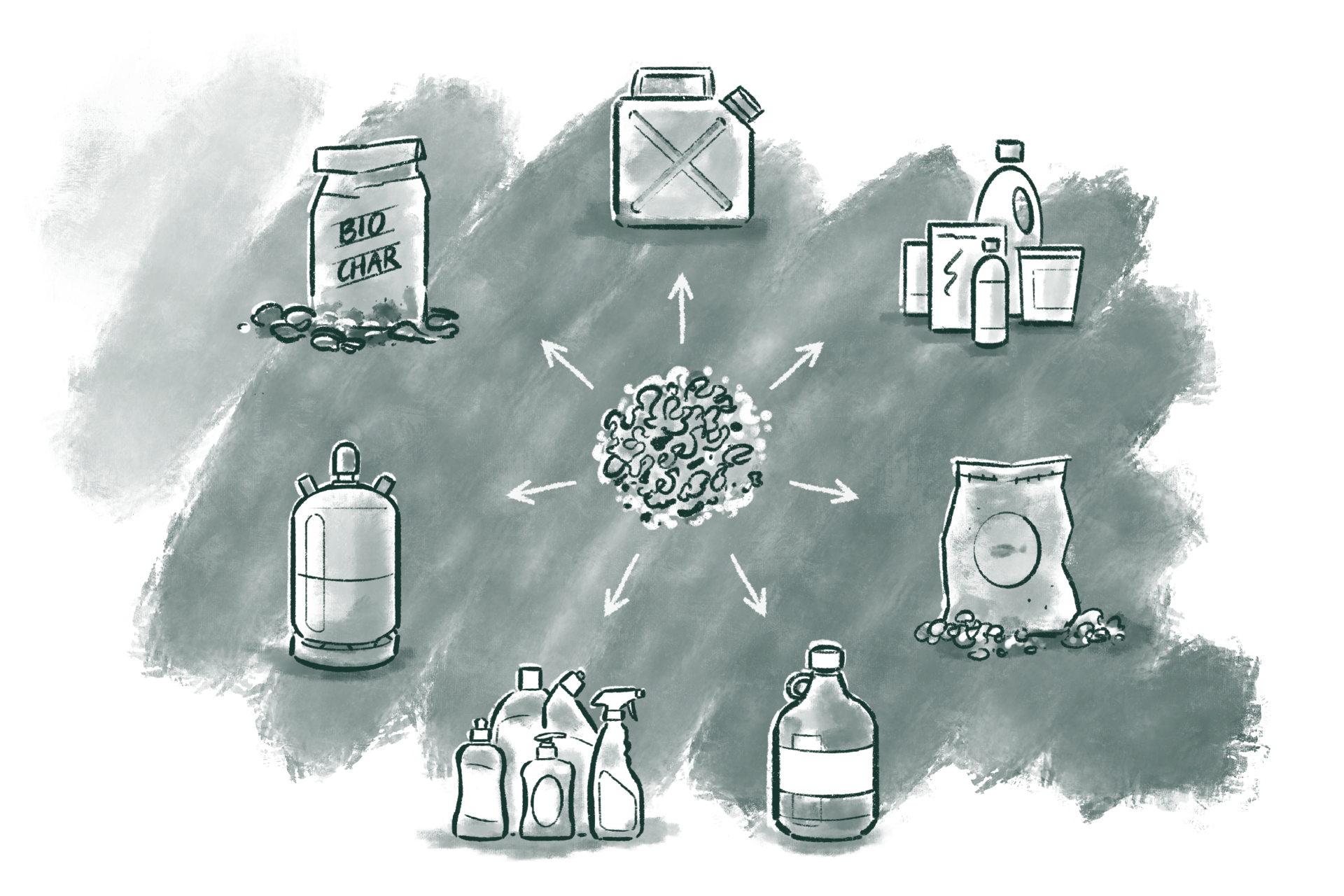
Biosolutions break the organic matter into its different components and use each component in the most efficient way thereby providing home-grown alternatives to imported products.
This results in:
- Better use of available resources
- Reduced dependency on imported inputs
- New pathways that include agriculture and energy

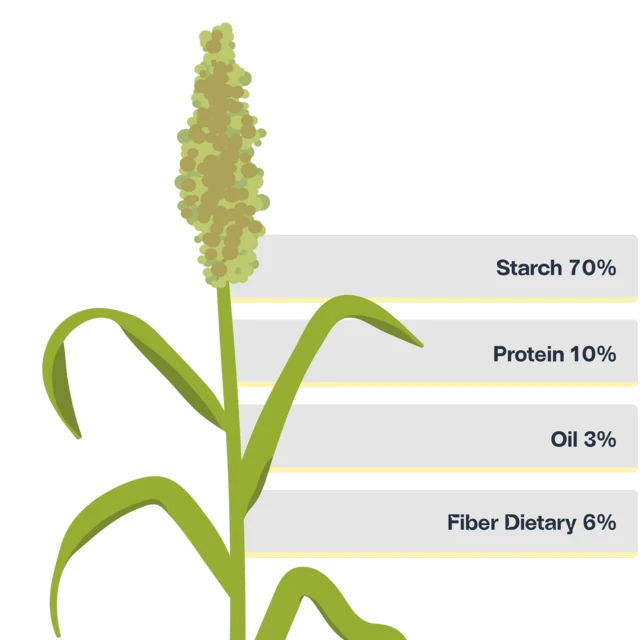
Let’s break down sorghum
Sorghum has many parts that can be extracted and turned into different revenue streams.
Starch ~70% — Used for ethanol (biofuel) production, food applications (flours, brewing). And industrial starch products.
Protein ~10% — Used in animal feed and gluten-free human food products.
Oil ~3% — Present in small quantities; used in food and has emerging potential for renewable fuel applications.
Fiber dietary ~6% — An ingredient for digestive heath food products and residual fiber used for bioenergy or feedstock.
Explore how biosolutions reduce reliance on fossils
Explore this issue of the Biosolution Bulletin that explains how the dark, thick liquid extracted from wells dug deep into the Earth until now has powered our cars, fueled our aeroplanes, and kept our ships moving across the oceans – and how biology is now changing the game.
The future, delivered monthly
Want more? From deep-dives into new tech to visions of a bio-based future, The Biosolutions Bulletin delivers the latest innovations directly to your inbox every month.
Sign up to stay ahead
To view this form, update your cookie preferences
This form is hidden because Marketing Cookies are turned off. You can enable them in your cookie settings to continue.
Get the latest insights on how to better our world with biology
Welcome to the world of biosolutions and Novonesis - the latest news, the biggest insights and a glimpse into the life of the worlds leading biosolutions partner.
Review the data and research behind South Africa's transition to biosolutions.