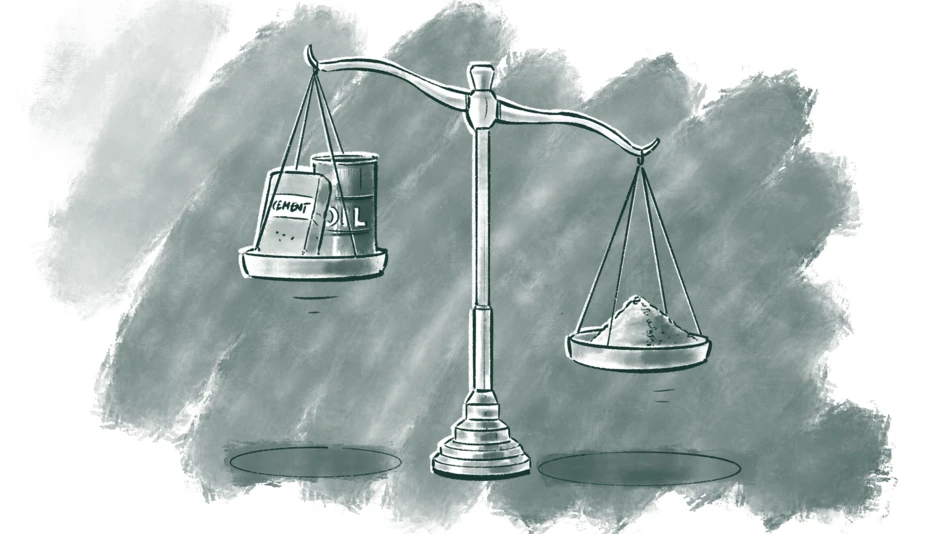
To appreciate why alternatives like those explored in “Biosolutions beneath our feet” are being considered, it helps to first examine how these conventional materials came to dominate — and the challenges that now accompany their continued use.
Across history, great empires have announced themselves in stone. The Pyramids of Giza still rise from the desert. The Colosseum still dominates the heart of Rome. The Taj Mahal and Machu Picchu continue to draw people from across the world, centuries after the empires that built them faded.
These structures are often treated as symbols of power or beauty. But there is something even more impressive about them: they continue to remain standing centuries after their construction.
The other set of enduring structures these empires built are roads.
Long before modern asphalt highways, empires understood that they could not thrive by remaining rooted in one place, no matter how grand their buildings were. Goods had to move. Armies had to march. Ideas had to travel. Roads connected cities, stitched together territories, and turned scattered settlements into functioning regions. Some of these ancient road networks, in parts, still exist today.
Yet whether it was constructing a building or a road, one challenge remained the same: how do you make loose materials like stone and gravel stick together, and keep them that way despite the onslaught of weather and usage?
The answer lies in something most of us rarely think about — the binder.
What is a binder?
In construction, a binder does exactly what the name suggests: it binds things together.
If you simply stacked bricks to form a building, would it stand or collapse?
And if you spread loose sand, crushed stones, and gravel on the ground, would that really function as a road?
In both cases, something essential would be missing. A binder is the material that holds these loose pieces together, turning them into something solid and durable.
For much of history, humans experimented with a wide range of natural mixtures to act as binders. Today, two materials dominate this role:
- Portland cement: usually referred to simply as cement, for buildings
- Bitumen: for roads
Together, these two materials have transformed how we build. They sit at the heart of modern development and economic growth. It is no surprise, then, that humanity produces them in enormous quantities every year: more than four billion tonnes of cement and around 128 million tonnes of bitumen.
But why did these two materials become so dominant as binders? What makes them so effective at holding our buildings and roads together? And more importantly, why does our reliance on them now raise difficult questions for the future?
Let us take a closer look.
Why cement became the binder of choice for buildings
Buildings must stay standing, carrying not just their own weight but that of people, furniture, and machinery. Cement provides the strength to hold concrete and stone together. Its story begins with limestone, used for thousands of years: when heated, it becomes quicklime, which mixed with water forms lime mortar. The Romans improved this by adding volcanic ash, creating binders that could set under wet conditions and even self-heal small cracks¹,².
In 1824, Joseph Aspdin, an English bricklayer and pioneering innovator in construction materials, patented Portland cement—burning limestone and clay into clinker, then grinding it into a fine powder³. Mixed with sand and gravel, it hardens into concrete, offering consistent strength, durability, and versatility. Limestone remains at the foundation of the materials that hold our buildings together.
In 1824, Joseph Aspdin, an English bricklayer, patented and proudly named Portland cement, promoting it as a superior building material. The name stuck, and with it, his legacy.
Why bitumen became the binder of choice for roads
Unlike buildings, roads face constant stress from traffic and weather, requiring a binder that is both strong and flexible. Bitumen, mixed with sand and crushed stone to form asphalt, meets this need⁴,⁵,⁶. Used for thousands of years—from binding stone tools to ancient construction—bitumen only became widespread in the 19th century when motorized vehicles demanded durable, flexible surfaces⁵.
Early bitumen came from natural deposits in Europe⁶, but oil refineries enabled large-scale, consistent production⁷. In refineries, crude oil is heated to separate its components; the heaviest fraction that remains is bitumen, thick and almost solid at room temperature⁷, ready to bind roads.