Enjoy listening? Follow The Biosolutions Bulletin to hear future audio editions as soon as they’re available.
Pets do not choose what they eat. Their daily nourishment depends entirely on what we place in their bowl, and that makes feeding far more than a routine task. To keep pets eating it day after day, pet food must not only be appealing; it must also deliver the essential nutrients they need to function properly and enjoy life with their families.
Biosolutions help address these twin challenges using two powerful tools derived from nature: enzymes and microbes. Enzymes help make food more appealing and enjoyable for pets, while microbes help shape their internal environment that supports their overall well-being.
Let us begin by understanding the role of enzymes. And to understand enzymes, we must first understand proteins, the molecular building blocks that sustain life.
What are proteins?
Proteins are essential molecules that perform countless roles in living organisms — from building tissues and carrying nutrients to catalyzing biochemical reactions in cells.
Proteins form the foundation of most animal-based foods, whether from chicken, beef, or fish. At the molecular level, all proteins are made from chains of small units called amino acids. These chains fold and twist into complex three-dimensional shapes, and how they are arranged determines how the protein behaves — including which flavors and aromas it can release.
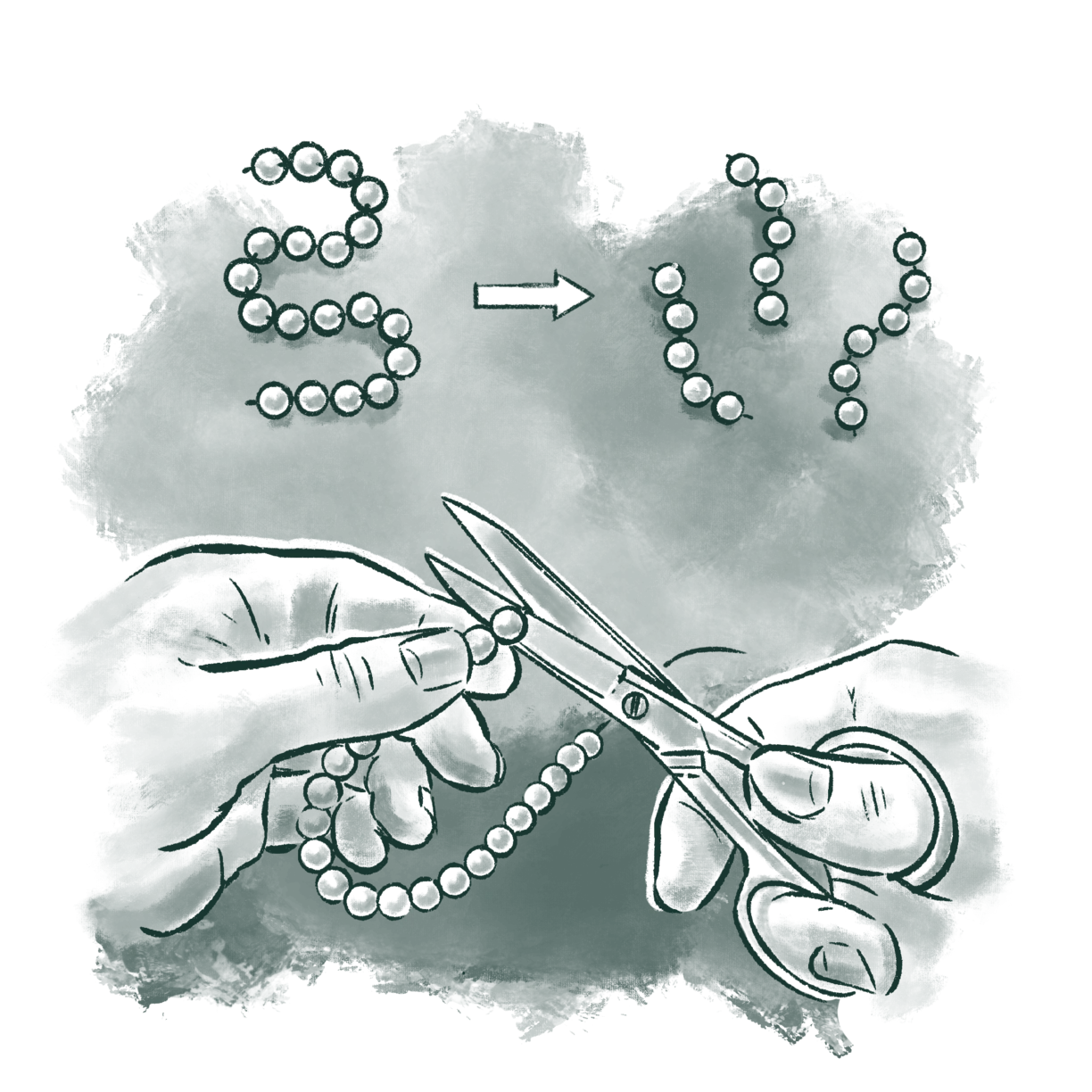
One way to imagine a protein is as a chain of pearls. The chain can fold, twist, and bend into a compact shape, just like a necklace piled into a small box. When the protein chain is broken into smaller pieces, new flavors emerge. Some fragments create savory, meaty notes, while others can taste bitter, depending on how the chain is cut. Think of it like cooking garlic: a whole clove releases a mild aroma, but crushing or chopping it intensifies its flavor. Proteins behave in much the same way.
Enzymes break large protein chains into smaller, manageable pieces, a crucial step in creating nutritious and easily digestible pet food.
Two ways to break down a protein
There are two processes – Endo cutting and Exo cutting – that transform the protein into smaller pieces, but in very different ways: one rapid and broad, the other slow, precise, and controlled.
Returning to our chain-of-pearls analogy, imagine the protein as a long, folded necklace. Endo-cutting is like snipping the chain at several points along its length, breaking it into many shorter fragments all at once. Keep cutting those pieces further, and eventually you might be left with individual pearls.
Exo-cutting, in contrast, is more gradual. Pearls are removed one by one from the ends of the chain, shortening it step by step rather than breaking it apart suddenly.
Together, the two cutting processes shape how proteins behave, which is fundamental to their digestion and to the release of flavors and aromas in food.
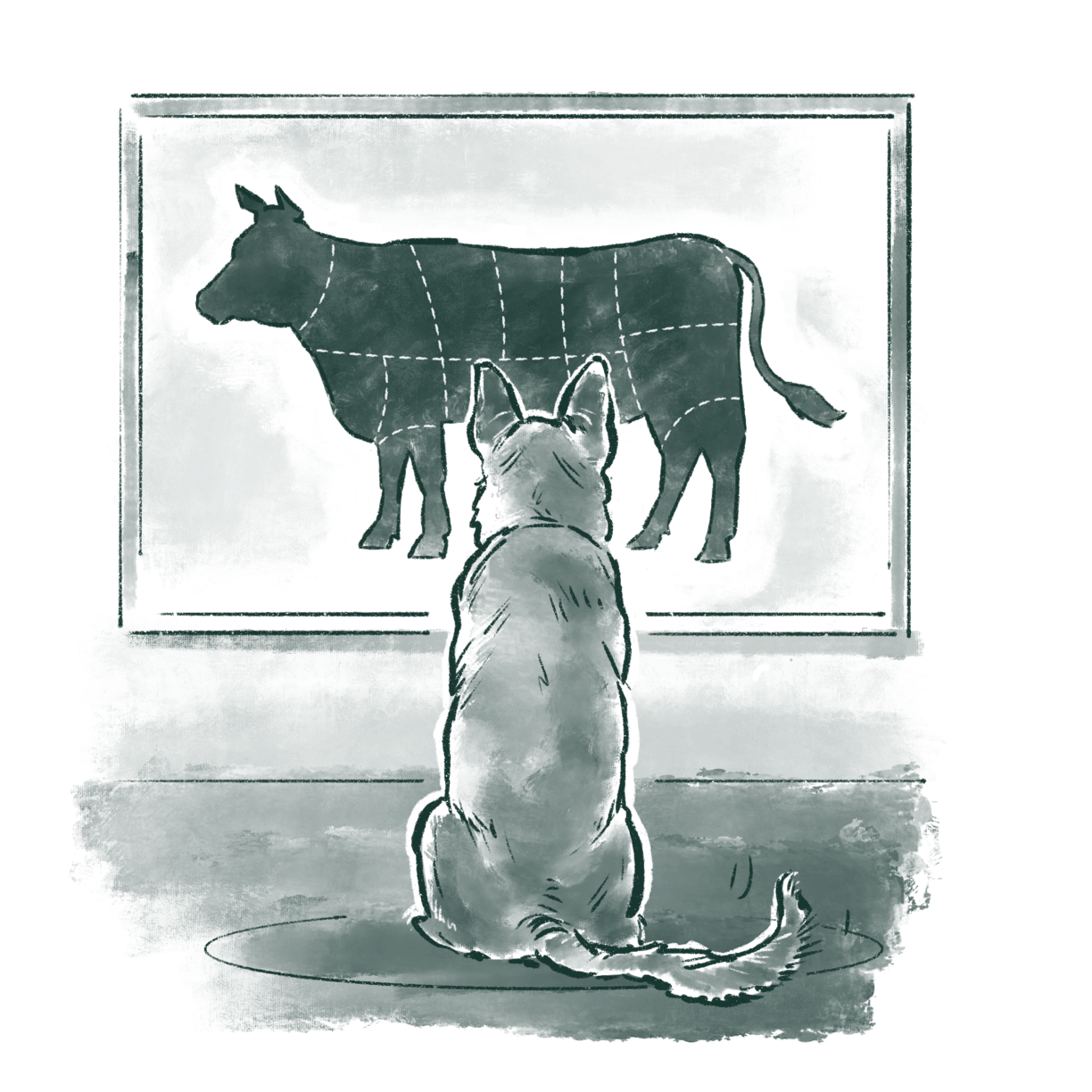
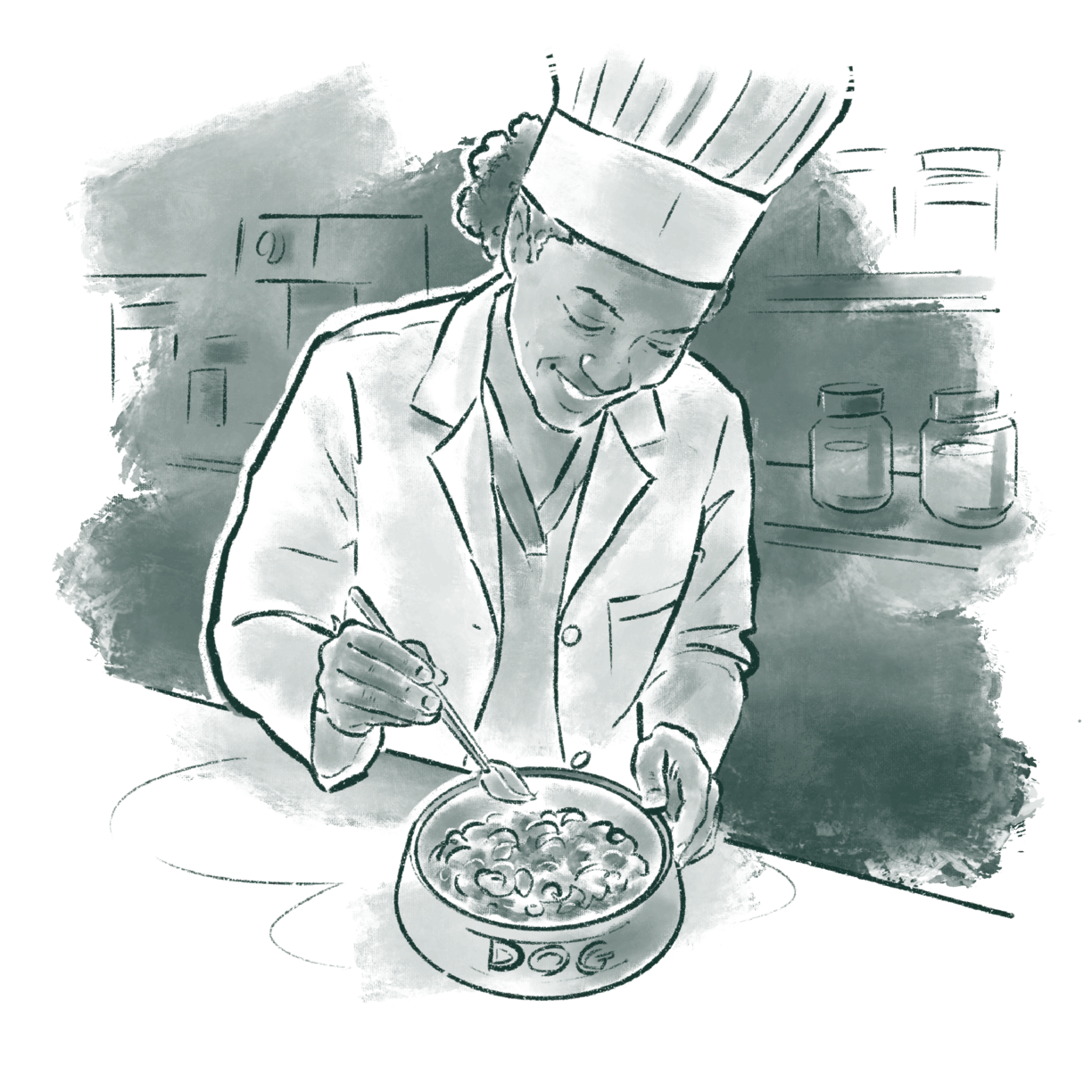
While steak is really on the menu, enzymes do the trick of turning tough cuts into meals pets can actually enjoy.
From protein structure to pet food flavor
Now let us turn to the manufacturing of pet food. Unlike most meat consumed by humans, pet food is not made from muscle meat alone. It often includes organs, bones, skin, fish parts, and even feathers — nutrient-rich animal by-products that might otherwise go to waste1.
These are parts of animals that do not typically align with the culinary or aesthetic preferences of human food, but they can provide valuable proteins and minerals for pet nutrition. Their use is regulated to ensure safety and quality.
At the same time, using these materials helps reduce food waste and allows animal resources to be used more thoughtfully and efficiently. But there is a challenge. The proteins in these materials are large, tightly folded, and not very accessible. To turn them into food that pets readily accept, these proteins must be broken down into smaller, more digestible, and more flavor-active components. So how do pet food makers carry out the endo-cutting and exo-cutting of proteins?
Inside the pet food factory
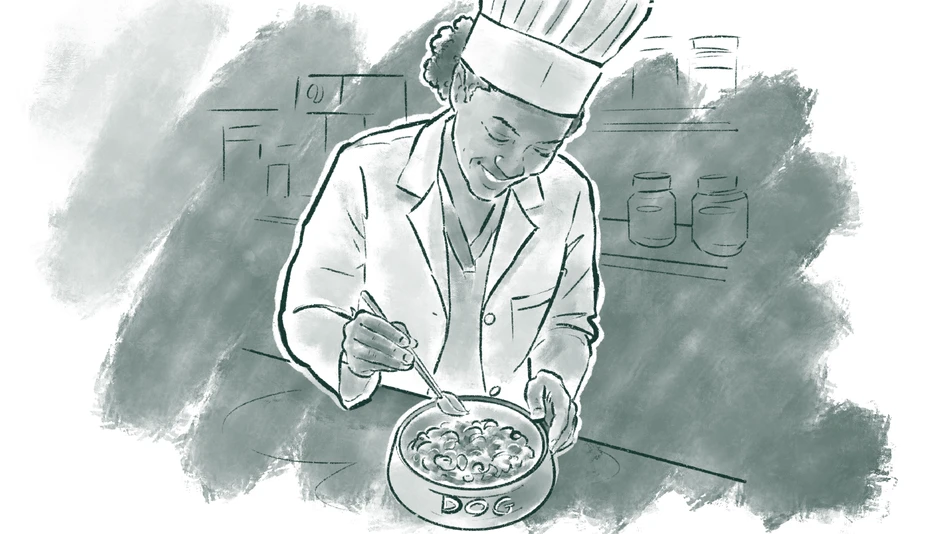
Inside a pet food production facility, the endo and exo-cutting processes are not just used — they are carefully staged, almost like steps in a recipe to transform dense animal proteins into flavors that pets instinctively recognize as appealing.
Endo-cutting comes first. It slices large, folded protein structures into many smaller fragments quickly, releasing rich, savory aromas like e.g. the deep umami flavor of slow-cooked broth. In pet food production, enzymes such as Novo-Pro® D carry out this rapid breakdown. But unfortunately, it can also reveal bitter-tasting amino acids.
Enter exo-cutting which follows as a gentle finishing step. Imagine the pearl necklace again: instead of snapping it into chunks, exo-cutting slides individual pearls off one by one until only the most desirable structure remains. In a process called debittering, enzymes like Flavorzyme® solve the problem by removing or reshaping many of the components responsible for bitterness.
A tiny discovery in 1836—pepsin—kickstarted a protein-breaking revolution still shaping food and industry today.
Enduring tough conditions
In 1836, German physician Theodor Schwann discovered pepsin, the first enzyme known to break down proteins. Since then, thousands of similar protein-breaking enzymes, called proteases, have been identified and are widely used in industry. In pet food production, these enzymes must not only break down proteins but also remain stable and effective through heat, mixing, and large-scale processing, delivering the same results every single time.
This is where biosolutions come in. Companies like Novonesis use carefully selected microorganisms to produce specialized enzymes through fermentation, a natural process in which microbes act as tiny biological factories to produce enzymes. This makes it possible to create enzymes designed to work predictably under real manufacturing conditions.
With this level of precision, pet food producers can transform complex animal proteins into food that is easier to digest, richer in flavor, and far more appealing to the animals that eat it.
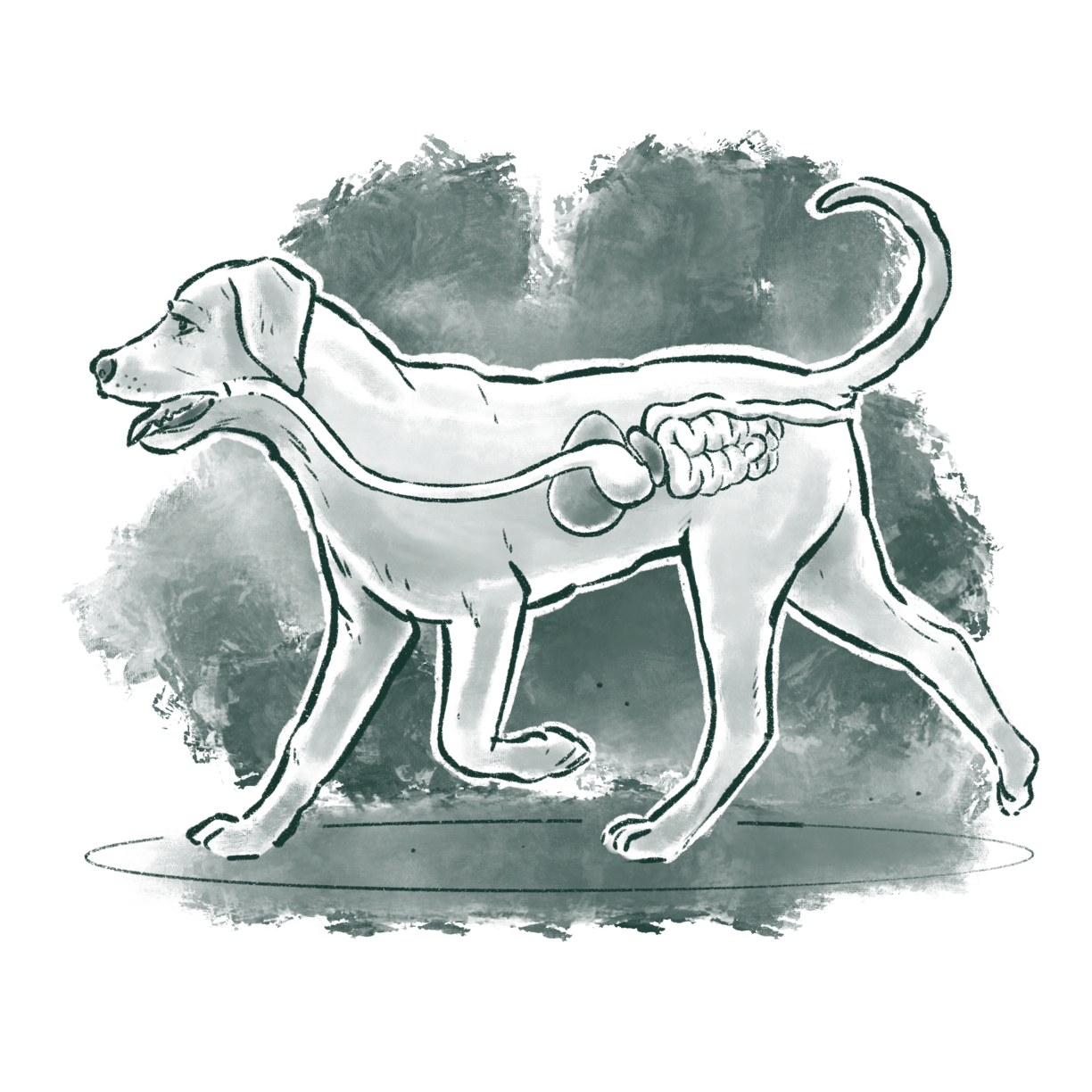
Making food taste good is only the beginning. Once eaten, that food becomes part of a living internal world inside the guts of our pets, a world shaped by trillions of microbes.
And that brings us to microbes, the gut microbiome, and … probiotics!