Discover how the DeniBrite™ platform helps formulators and laundries lead the next era of denim bleaching with enzymes.
Denim Biobleaching
Lead the next era of denim bleaching with enzymes
Replace hazardous oxidizers while achieving the denim looks brands demand — with greater control, consistency, and compliance.
Powered by the DeniBrite™ enzymatic biobleaching platform.
Denim bleaching is evolving
For decades, denim bleaching has been defined by one question: How do we achieve the right look?
Today, the question is much broader.
Brands expect authentic aesthetics. Laundries need efficient, reliable production. Formulators must balance creativity, performance, and compliance.
Denim bleaching is no longer just about achieving the right look—it’s about proving how that look is made.


Fashion
Brands demand more diverse aesthetics.

Performance
Laundries need stable, repeatable processes.

Responsibility
Compliance expectations continue to increase.
What is Denim Biobleaching?
Denim biobleaching – also known as enzymatic denim bleaching – is an enzymatic approach to creating lighter denim looks through the selective modification of indigo dye.
Unlike conventional bleaching processes that rely on aggressive oxidizing chemistry, enzymes enable controlled bleaching under milder conditions—helping manufacturers balance aesthetics, fabric quality and process consistency.
While enzymatic bleaching has been part of denim finishing for many years, today's combination of improved enzyme technology, growing sustainability expectations and changing fashion demands is driving renewed interest across the industry.

Why enzymes are leading the next era of denim bleaching
Create authentic denim looks
From bright modern washes to authentic vintage finishes.
Improve process control
Consistent bleaching performance with repeatable results.
Protect garment quality
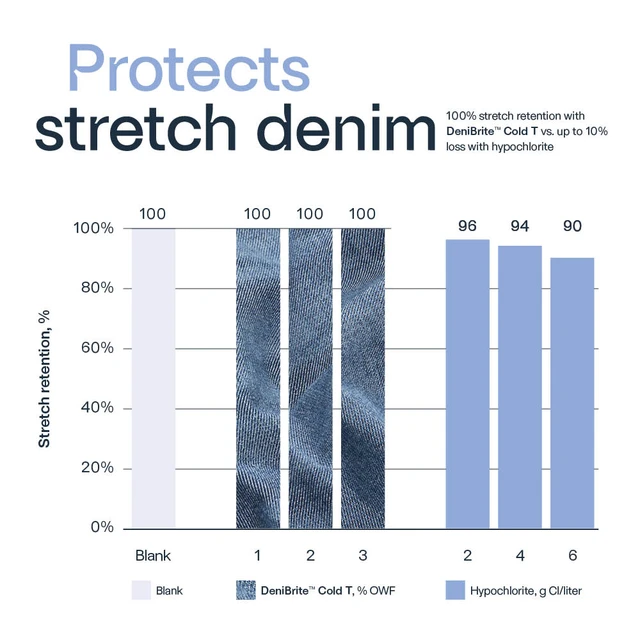
Gentle enzymatic action helps preserve fabric strength and stretch.
Simplify compliance
Support safer, certified bleaching systems for modern denim production.
Fashion:
From bright modern washes to authentic vintage finishes, DeniBrite™ gives formulators and laundries the flexibility to create a broad spectrum of denim aesthetics.
Enzymatic bleaching delivers natural-looking fades, clean contrasts, grey-cast effects, and distinctive vintage character while preserving the authentic appearance consumers expect.

Performance:
Engineered for controlled oxidation under mild process conditions, DeniBrite™ helps reduce process variability while protecting garment quality.
Gentle enzyme action preserves fiber strength and elasticity, delivering repeatable bleaching performance across machines, operators, and production sites.
Responsibility:
Replace hazardous bleaching chemistries with enzyme solutions designed for today's compliance expectations.
DeniBrite™ solutions are ZDHC Level 3 and bluesign approved, helping formulators and laundries build safer bleaching systems. Selected solutions can also reduce the carbon footprint of denim bleaching by up to 55% compared with hypochlorite-based processes.
Where biobleaching creates value
For formulators
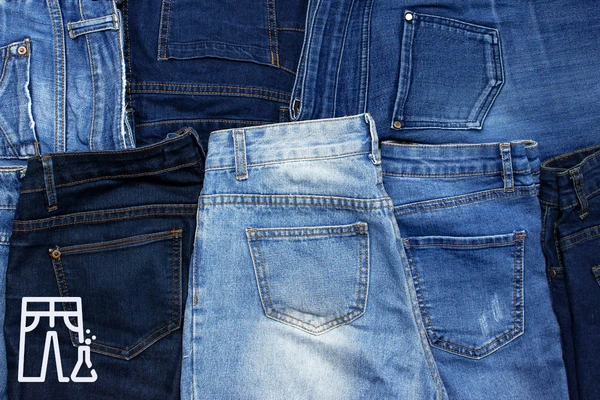
Design differentiated bleaching systems that combine fashion versatility, technical performance and certification readiness (bluepass and ZDHC Level 3).
Develop solutions laundries can implement confidently while strengthening your portfolio for changing brand requirements.
For laundries
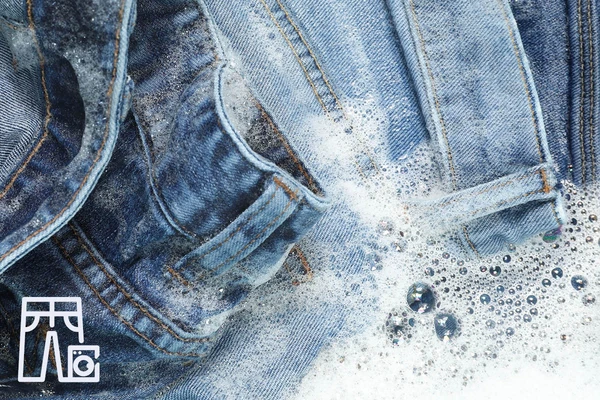
Deliver the denim looks brands demand through controlled, repeatable processes that improve production stability while supporting safer, more efficient operations with chemistry designed to help meet brand chemical management requirements.
Choosing the right bleaching technology for your desired finish
Every denim bleaching technology has its strengths. The right choice depends on the desired aesthetic, production setup, sustainability objectives and investment strategy. Increasingly, manufacturers combine technologies to achieve the best balance of creativity, efficiency and compliance.
| Technology | Typical application | Key characteristics |
| Enzymatic bleaching | Versatile bleaching from bright contemporary washes to authentic vintage finishes | Selectively targets indigo dye, helping preserve fabric quality while enabling controlled bleaching under mild conditions |
| Potassium permanganate | High-contrast local bleaching | Strong oxidation for localized effects, but increasing concerns around worker safety and chemical management |
| Hypochlorite | Overall bleaching and high whiteness | Fast bleaching performance but can increase fibre damage and requires careful neutralization |
| Ozone | Overall bleaching with reduced water use | Low water consumption but requires dedicated equipment and process control |
| Laser | Local artistic effects and patterns | Water-free technology for precise designs, typically used alongside other bleaching processes |

Fashion. Performance. Responsibility.
The future of denim bleaching delivers all three.
The future of denim bleaching delivers all three.
Discover how DeniBrite™ is helping redefine denim bleaching with enzymes.

DeniBrite™ Cold T - Bright looks. Low impact.
Efficient low-temperature enzymatic bleaching designed for clean contrasts, enhanced process efficiency and resource savings.

DeniBrite™ Vintage - Build character. Naturally.
Create authentic grey-cast and antique denim finishes through controlled laccase-based bleaching.
Contact us today
To view this form, update your cookie preferences
This form is hidden because Marketing Cookies are turned off. You can enable them in your cookie settings to continue.
Frequently Asked Questions
Denim biobleaching is an enzymatic bleaching process that selectively modifies indigo dye to create lighter denim looks. Unlike conventional bleaching methods that rely on strong oxidizing chemicals, enzyme-based bleaching works under milder conditions to improve process control while helping preserve garment quality. It can be used to create everything from bright contemporary washes to authentic vintage finishes.
Specialized oxidoreductase enzymes selectively oxidize indigo dye on the denim surface. By controlling process conditions such as temperature, dosage and treatment time, manufacturers can achieve predictable bleaching effects while minimizing unnecessary fibre damage.
For many bleaching applications, yes. Enzymatic bleaching can provide an effective alternative where manufacturers want to reduce reliance on hazardous oxidizing chemicals while maintaining attractive fashion effects. In other applications, enzymes may also complement existing finishing technologies as part of an optimized bleaching process.
Compared with conventional oxidizing chemistry, enzymatic bleaching generally offers gentler processing conditions that help preserve fibre strength and garment quality. Process optimization remains important to achieve the desired balance between bleaching intensity and fabric performance.
The answer is yes—in every case, this biosolution can be seamlessly integrated into the standard jeans washing process. You can also use it for specialized treatments such as waterless applications, nebulization, and spray methods, all under safety measures approved by Novonesis.
Yes, it’s the perfect match! Because enzymes selectively target indigo rather than the cotton fiber itself, enzymatic bleaching can help preserve fabric strength and elasticity, making it well suited for modern stretch denim constructions.
Yes. Controlled oxidation of indigo creates natural-looking fading suitable for premium denim collections.
Yes. Depending on the enzyme system, bleaching can be performed under relatively mild temperatures, reducing energy consumption while maintaining bleaching performance. Products such as DeniBrite™ Cold T have been specifically developed for efficient low-temperature bleaching.
Certification depends on the specific formulation. DeniBrite™ solutions support compliance with industry initiatives including ZDHC Level 3 and bluepass (bluesign), helping formulators and laundries address growing brand expectations around chemical management.
Formulators typically incorporate enzyme technology into complete bleaching systems tailored to different denim looks and laundry processes. Novonesis works with formulation partners to optimize performance, application guidance and compliance documentation.
As a bluesign System Partner, Novonesis develops textile and leather solutions according to one of the industry's most recognized systems for responsible chemical management. This helps formulators build compliant bleaching systems and gives laundries greater confidence that the chemistry they use aligns with leading brand and retailer expectations.
Comparing bleaching systems on chemical cost alone doesn't provide the full picture. While direct chemistry costs vary depending on the process, DeniBrite™ is designed to deliver value across the entire operation. By replacing hazardous bleaching chemistries, it can help reduce water and energy consumption, simplify processing, protect fabric quality, and support compliance with evolving brand and regulatory requirements. The overall value of DeniBrite™ should therefore be assessed based on total cost-in-use and long-term business benefits—not solely on the cost of the bleaching chemistry.