Since then, technology has taken ocean exploration far deeper — from the first Bathysphere dives in the 1930s2, in spherical steel chambers, to today’s autonomous vehicles probing the Mariana Trench3, the planet’s deepest oceanic canyon 11 kilometers down. These advances continue to reveal astonishing discoveries, like microbes producing “dark oxygen”4 in the ocean’s depths, challenging the long-held belief that photosynthesis is the only source of oxygen on Earth.
Exploration, however, is not limited to oceans. The human body, too, is a frontier. Just as oceanographers uncover hidden depths, modern science has revealed layers of our biology invisible to the naked eye but essential to life. Peering through a simple optical microscope is no longer enough. To truly understand these hidden worlds, biology now converges with physics, chemistry, engineering, and computing.
This article traces that journey: from the first glimpses of cells under a crude microscope to the revolutionary technologies including artificial intelligence that are reshaping our understanding of life. Together, we’ll peel back the layers, one by one, and explore the invisible world inside us.
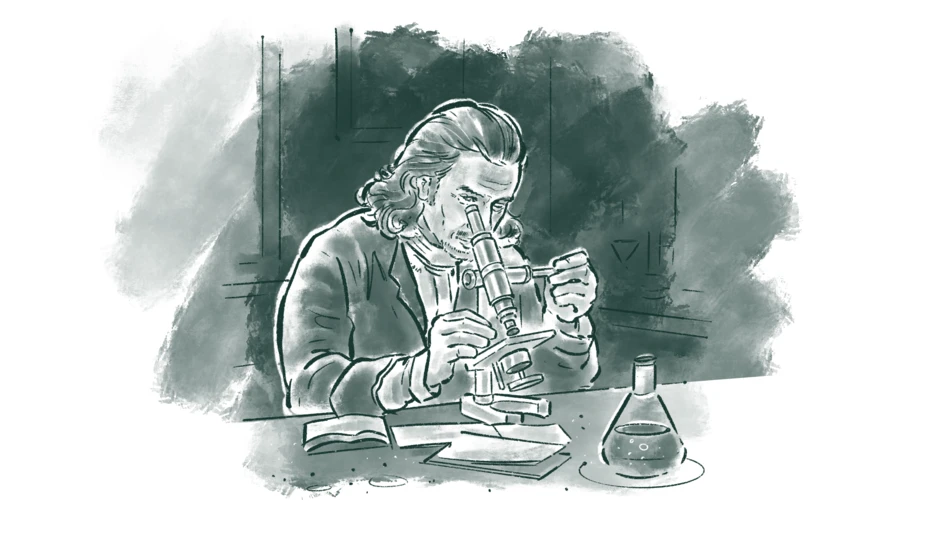
Peering into the unseen: The first glimpse of life through Hooke and Leeuwenhoek’s microscopes opened the door to the hidden world of cells.
Why start with the cell? Because it was the earliest visible gateway into the hidden world of life. The very first time a cell was observed under a microscope was in 16655, when Robert Hooke examined a thin slice of cork. What he saw reminded him of the small rooms, or “cells,” in a monastery, and the name stuck. A few years later, in 1674, Anton van Leeuwenhoek6 took things further when he became the first to observe living cells under his handcrafted microscope.
Yet, neither Hooke nor Leeuwenhoek understood what they were really seeing. To them, cells were simply tiny compartments, their inner life a complete mystery. It would take nearly 170 years before scientists developed cell theory in the early 19th century, declaring that all living organisms are made of cells and that the cell is the basic unit of life. Only later, in the second half of that century, did researchers begin to uncover the first clues about what actually happens inside cells. By the 1930s, with the invention of more advanced microscopes, the hidden machinery of the cell finally started to come into focus.
So, what exactly is a cell, and why do scientists call it the “basic unit of life”?
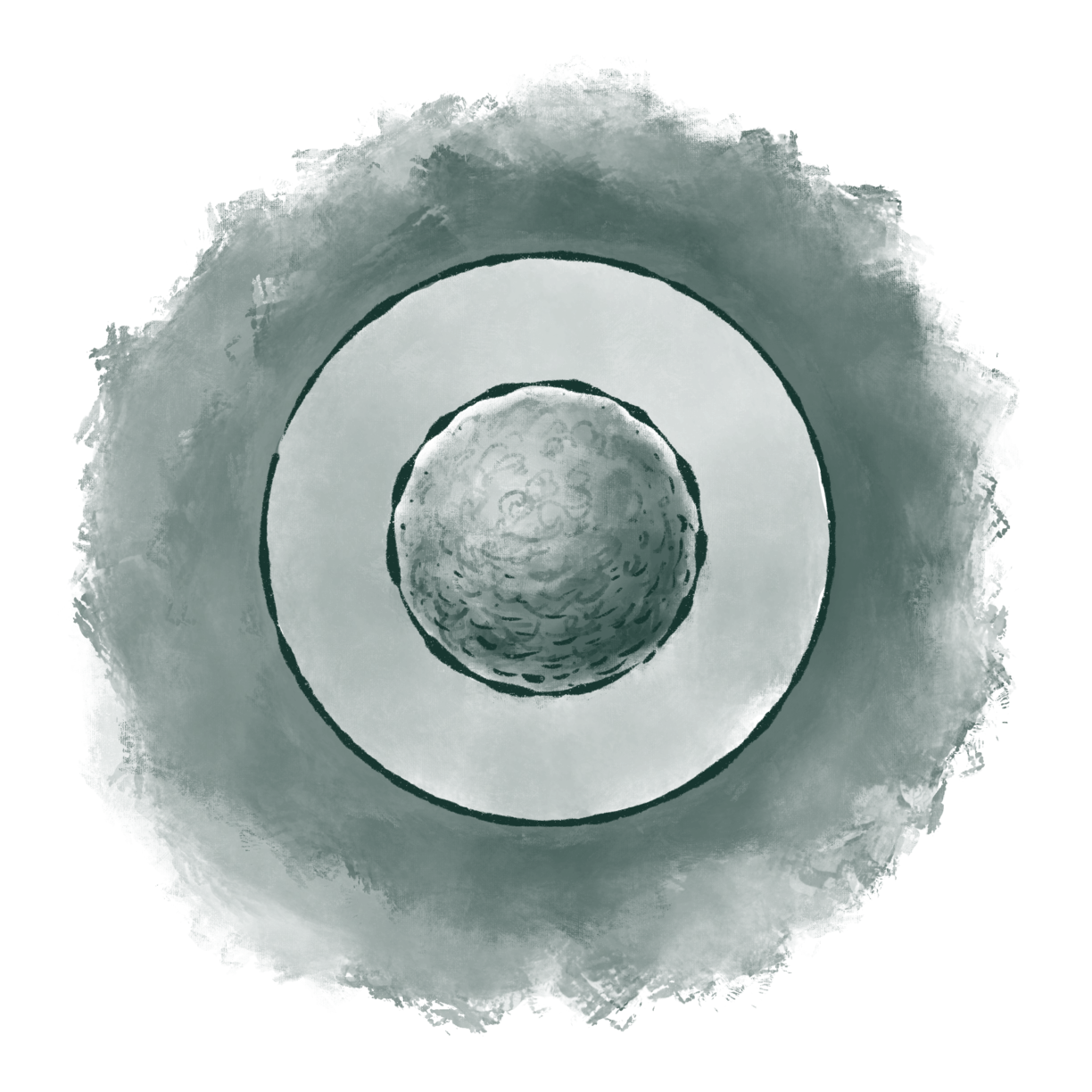
Here’s a tiny city you can hold in your imagination: a single cell. Its walls protect, its interior bustles with energy and factories, and its central nucleus directs the work of life
A cell is like a tiny, self-contained city. When many such cells come together, they form a multicellular organism — like you, me, and every plant and animal around us. And while organisms differ enormously, at the cellular level their basic architecture is remarkably similar:
Cell membrane
The protective boundary, like city walls or gates, deciding what enters and what leaves. In plants, this is reinforced by an extra tough layer called the cell wall.
Cytoplasm
The jelly-like substance filling the space between the cell membrane and the nucleus is like the open landscape of a city. Within it lie organelles, the cell’s miniature organs, each with specialized roles. Mitochondria are small structures that produce energy for the cell, like power plants generating electricity for a city. Ribosomes are the city’s factories, building proteins that serve as essential tools and workers, while other organelles function as roads, communication networks, and recycling centers, keeping the city organized and efficient.
Nucleus
The city’s main library at the center, storing the master plans and blueprints, and coordinating all activities.
Despite being incredibly small, so small that millions could fit on the head of a pin, cells are remarkably organized. They can sense changes in their environment, communicate with one another, and even repair themselves when damaged.
But early scientists did not yet know this. To them, the cell was just a box with a nucleus inside. The true complexity of the nucleus would only be revealed with better tools. And so, our journey continues as we peel back the next layer and step into the nucleus itself: the city hall of the cell.
The second layer: The cell nucleus
How much time do you think passed between the discovery of cells and the discovery of the rounded structure sitting at their center, the nucleus? Any guesses?
It may surprise you: it took 166 years. In 1831, a botanist named Robert Brown 7, while studying orchids under his microscope, spotted a distinct central body inside the cells. He named it the nucleus.
So, what exactly is this nucleus, and why do we compare it to the city’s main library — the place where all the master plans, blueprints, and instructions are stored and coordinated?