Yeasts Supporting Sustainability
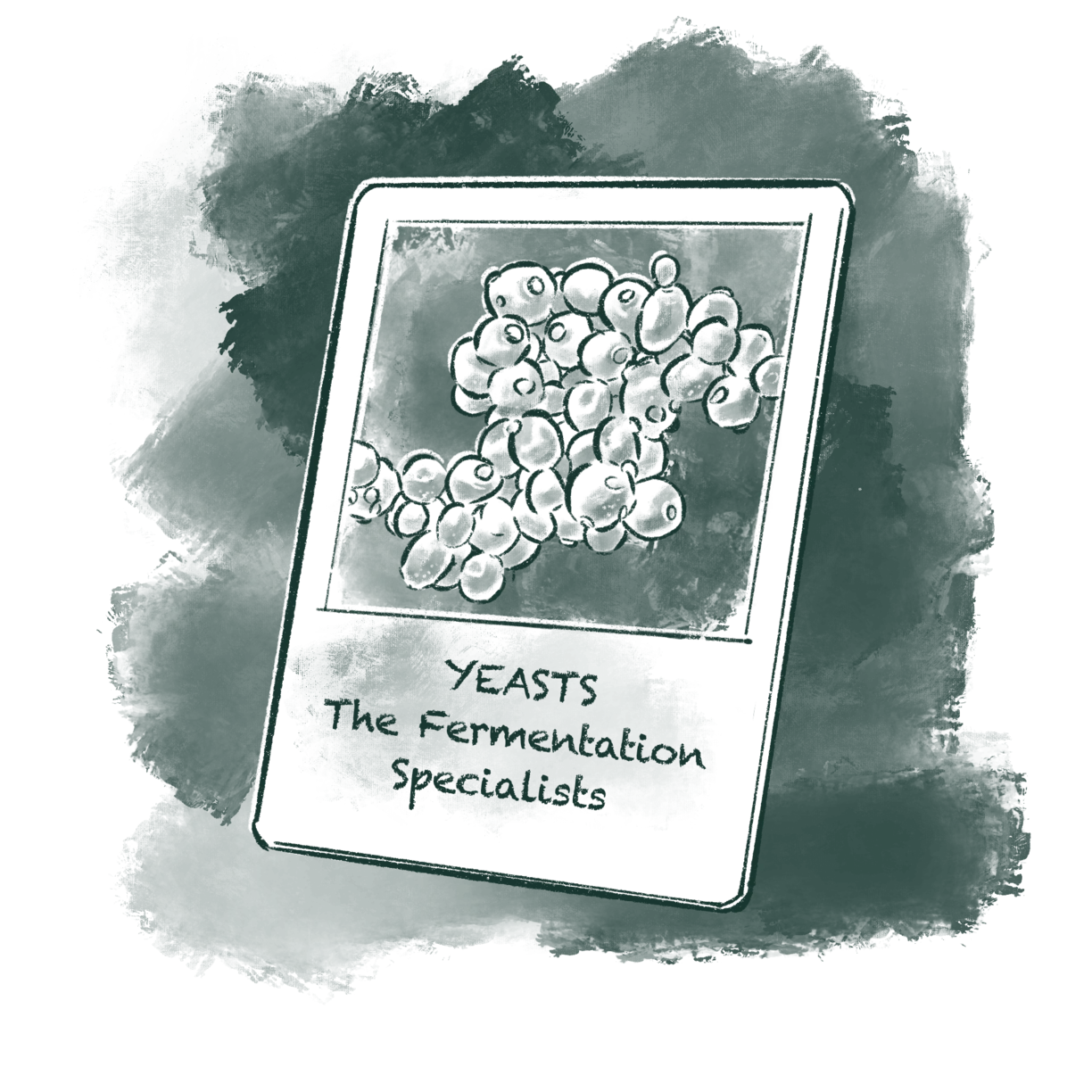
1. Pichia kluyveri3:
Added before fermentation, it quickly colonizes must, outcompeting unwanted microbes. This stabilizes grapes, prevents premature fermentation, and reduces spoilage—especially valuable when grapes travel long distances.
2. Torulaspora delbrueckii4:
Competes with harmful microbes and slightly slows fermentation, mimicking complex “wild” fermentations. It adds aroma, softens the palate, and reduces the need for sulfites, supporting more sustainable wines.
Yeasts that Make Winemaking More Efficient
Introducing yeast can be risky: dried yeast requires rehydration, and errors can kill cells or stall fermentation, especially as climate change produces unpredictable musts.
Direct-inoculation yeasts eliminate this risk. Unlike traditional dried yeast, they do not need to be rehydrated or acclimatized before use. Winemakers can add them straight into the must, where they start fermenting immediately – reducing risk, saving time, and ensuring a strong, reliable fermentation even under difficult conditions.
Bacteria, the silent stabilizers
Bacteria are just as important as yeast in winemaking. Their moment to shine comes during malolactic fermentation (MLF), which happens after the yeast have finished turning sugar into alcohol (alcoholic fermentation).
The backstage heroes of wine, bacteria stabilize flavor and harmony without stealing the spotlight.
So, what is MLF? Well, grapes naturally contain two main acids: tartaric acid (grape acid) and malic acid (apple acid), which is sharp and tart. After the alcoholic fermentation, the presence of too much malic acid can make wines taste harsh or unbalanced. So, in MLF, a special bacterium is added, typically Oenococcus oeni, which transforms the malic acid into lactic acid, which in turn makes wine creamier and gives it mouthfeel.
MLF has historically been a slow and uncertain step. Winemakers once had to prepare “build-up” cultures and carefully manage conditions, which tied up tanks and sometimes failed. Direct-inoculation bacterial cultures have changed this. Like their yeast counterparts, they can be added straight into the wine, resulting in 2-3 weeks’ shorter fermentation time, cutting down on energy use for temperature control and freeing tanks up sooner. This not only saves cost but also lower the winery’s environmental footprint. In addition, bacteria also help winemakers make their wine less dependent on sulfites by naturally suppressing the growth of spoilage organisms.
Even so, climate change complicates this process. In higher temperatures grapes tend to have less malic acid content5, increasing the pH levels, which creates an environment perfect for unwanted microbes to thrive. Left unchecked, these microbes can create off-flavors and spoil the wine. This is where another set of carefully selected bacterial biosolutions step in — strains chosen for their reliability, safety, and ability to perform under stress:
Bacteria that adapt to climate challenges
Oenococcus oeni (high-alcohol tolerant strains) – Some select variants can thrive at alcohol levels up to 16% and high pH levels6, completing malolactic fermentation without getting stuck (i.e., without the bacteria stopping prematurely and leaving the wine harsh or unstable). This ensures wines are stable and smooth, even when the harvest delivers grapes outside the historical norm.
Lactobacillus plantarum – Strains of this bacterium act quickly during malolactic fermentation, establishing themselves early and stabilizing the wine before unwanted microbes can take over. But not only that: Some L. plantarum strains can carry out MLF without producing biogenic amines7 — natural compounds like histamine and tyramine that can cause headaches or other unwanted effects — making the wine safer and easier to enjoy.
Enzymes, the precision tools
If yeasts are the workforce and bacteria stabilizers, enzymes are the precision tools of winemaking. They do not ferment or stabilize; instead, they help winemakers unlock more from the grapes themselves.
Enzymes bring precision to the show, unlocking juice, color, and aroma while streamlining every step of winemaking.
Grapes are full of juice and natural compounds that often remain trapped within their skins or bound in forms that yeast alone cannot access. While microbes naturally produce some enzymes during fermentation, modern winemaking also uses carefully selected enzymes added directly to the grapes or must. Each one has a highly specific role — like a key fitting a single lock — and this precision makes them invaluable.
From improving juice yield to enhancing color and aroma, enzymes not only give winemakers more control but also help them adapt to the pressures of climate change:
Extraction enzymes (pectinases): Like all fruits, grapes contain pectin — the same compound that makes jams thicken and gives fruits their fleshy texture. Pectin makes it harder to release juice from grapes. Extraction enzymes, known as pectinases, break down these natural barriers, releasing more juice and unlocking aroma compounds hidden in the skins. These enzymes also help cut through the thick skins of grapes, one of the impacts extreme weather conditions can have on the fruits.
In practice, this means winemakers can extract up to 5 percent8 more juice from the same grapes, while cutting the cloudiness (turbidity) by more than half. These enzymes also help minimize unwanted “green” or herbaceous flavors that sometimes appear when grapes are stressed by heat or uneven ripening. The outcome is simple: more wine, brighter aromas, and cleaner flavors — all with fewer resources.